Discover the Bisleri saga—a tale of purity, innovation, and resilience in India’s bottled water landscape. From its origins as a remedy to Parle Group’s strategic acquisition, Bisleri has emerged as a household name, commanding a significant 26% market share. However, its success attracts counterfeiters, met head-on with witty campaigns like “Har Paani Ki Bottle Bisleri Nahi,” asserting its unmatched purity.
Bisleri’s charm lies in its diverse offerings, from Club Soda to Limonata, catering to every hydration need. With a green branding shift symbolizing environmental commitment and digital prowess via campaigns like #CarryYourGame, Bisleri redefines the beverage industry’s standards.
Explore Bisleri’s journey—a blend of humor, quality, and consumer-centricity that continues to quench India’s thirst for excellence.
The Bisleri Story
Late 1960s: Bisleri’s journey starts, originally an alcoholic remedy by Felice Bisleri.
1969 Acquisition: Parle Group, a leader in soft drinks, acquires Bisleri.
Visionary Leadership: Ramesh Chauhan of Parle sees potential in India’s bottled water market.
Strategic Investments: Focus on technology, quality control, distribution, and marketing.
Household Name: Bisleri has become widely known across India.
Competition: Stands strong against rivals like Coca-Cola Company’s Kinley, Parle Agro’s Bailley, IRCTC’s Rail Neer and PepsiCo’s Aquafina.
Marketing Impact: Successful campaigns establish Bisleri as a trusted, preferred brand.
The Battle Against Counterfeits
Conterfiet Bisleri Products
Bisleri’s popularity, however, has attracted counterfeiters. Marketed under misleadingly similar names like Belsri, Bilseri, and Brislei, these imitations threaten to tarnish Bisleri’s hard-earned reputation by deceiving consumers with potentially unsafe and substandard products.
Innovative Marketing Campaigns
To combat this, Bisleri launched a witty and impactful campaign, “Har Paani Ki Bottle Bisleri Nahi” (Not every bottled water is Bisleri). This series of lighthearted advertisements emphasised Bisleri’s unmatched purity. One such ad humorously depicts two camels in a desert, insisting on Bisleri over other brands, complete with a charming Rajasthani accent!
Another campaign cleverly plays on the mother-child dynamic, where a mother camel guides her offspring away from natural water sources, choosing Bisleri for its cool and pure qualities. These ads not only entertain but also strike an emotional chord, bolstering Bisleri’s image as the gold standard in bottled water.
Kissing Goodbye to Sharing (and Germs!)
Speaking of diverse needs, who said hygiene can’t be hilarious? Bisleri’s “Kiss to Drink” campaign tackled the awkwardness of sharing bottled water with a lighthearted touch. Remember the ad where the groom, overcome with thirst, plants a kiss on the bottle’s mouth – only to be met with the bride’s playful (yet firm) disapproval? “Get your own bottle!” she declares, reminding us that hydration shouldn’t involve a shared straw (or smooch).
This witty campaign not only promoted personal hygiene but also subtly nudged consumers towards buying their own Bisleri bottles – a win-win for both health and brand awareness. The campaign’s engaging and fun approach resonated well with its intended demographic, primarily young and city-dwelling consumers, making it a memorable and attractive promotion for this product.
From A Marketing Perspective:
Laughter is the best medicine (for ad campaigns): Using humour in ad films grabs attention, makes them enjoyable to watch, and encourages viewers to remember the brand. Think of it like adding sprinkles to your marketing sundae – it’s sweeter and more tempting to consume!
Mom knows best, especially when it comes to purity: Featuring a mother-child relationship in the ad taps into a universal emotional connection. We trust our moms to provide the best for us, and by associating Bisleri with that kind of care and nurturing, the ad subtly reinforces the brand’s commitment to purity and quality.
Setting the gold standard for hydration: By positioning Bisleri as the benchmark for pure bottled water, the ad subtly suggests that other brands might not be up to par. It’s like saying, “If you want the best, there’s only one choice”. This builds trust and reinforces the brand’s premium image.
Product Diversification and Quality Assurance
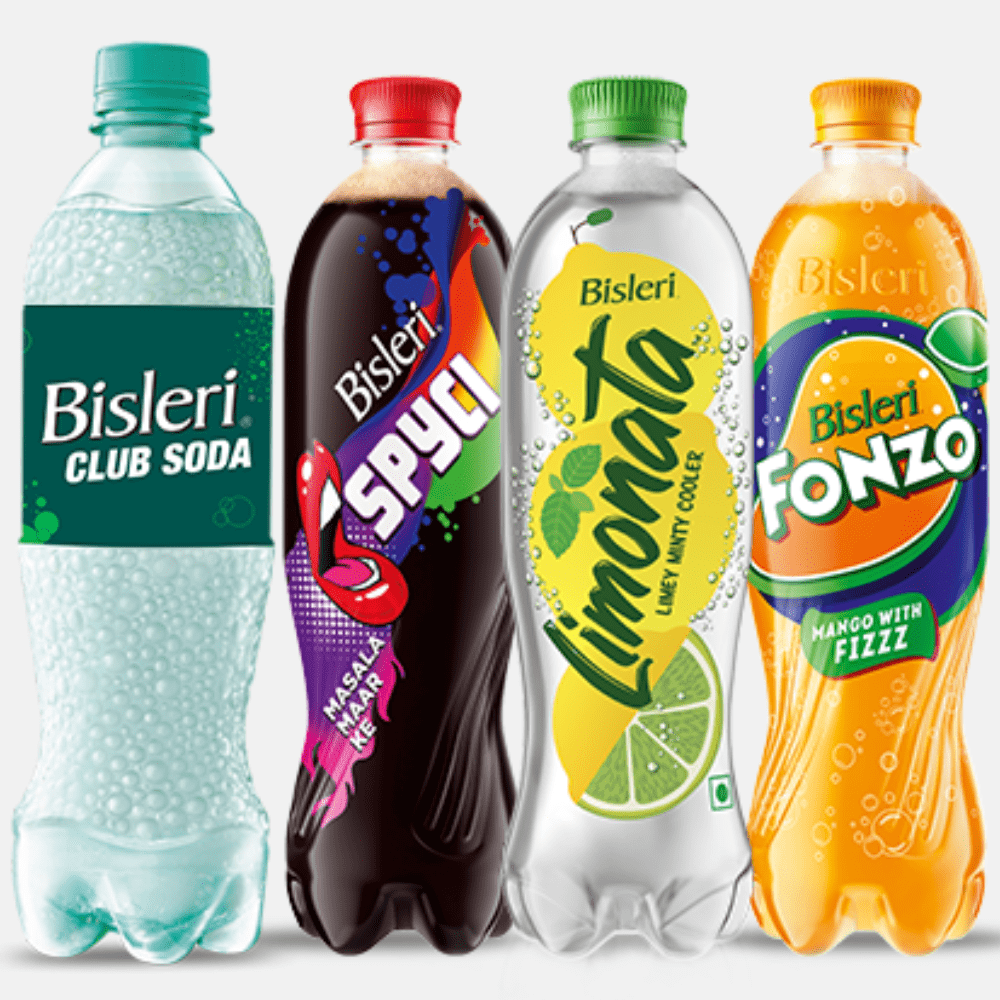
Expanding beyond mere bottled water, Bisleri has introduced a range of products like Bisleri Club Soda, Bisleri Fonzo, Bisleri Limonata and Bisleri Pop to cater to diverse consumer preferences. Each product, adhering to the highest quality standards, is certified by the Bureau of Indian Standards (BIS) and the Food Safety and Standards Authority of India (FSSAI).
Different Products of Bisleri
Creative Branding and Distribution Strategies
Bisleri also underwent a significant branding change, switching its brand colour from blue to green, distinguishing itself from competitors and symbolising its commitment to environmental sustainability. Additionally, the brand launched the “One Nation One Water” campaign, celebrating India’s rich linguistic diversity by featuring labels in multiple Indian languages, thereby deepening market penetration.
The brand’s distribution strategy is equally impressive, ensuring omnipresence from small shops to large supermarkets. Bisleri also boasts a fleet of 5000 trucks, optimising distribution efficiency and profitability. Embracing digital trends, Bisleri has introduced Bisleri@Doorstep which is available on online platforms like Amazon, JioMart, BigBasket etc. to expand its reach.
Beyond Convenience: A World of Hydration Options by Bisleri
Bisleri isn’t just a name synonymous with pure bottled water, it’s also a brand catering to diverse hydration needs. Forget the one-size-fits-all approach! Bisleri offers a wide range of sizes, from a pocket-friendly 250ml bottle to a party-perfect 20-litre jug. No matter your thirst or occasion, Bisleri has you covered.
Bisleri Bottles in Different Sizes
Bisleri: Mastering the Art of the Sip at Every Price
Bisleri knows hydration isn’t one-size-fits-all, and neither is their pricing! Here’s how they keep everyone cool:
Bulk Up, Save Up: The bigger the bottle, the sweeter the deal. Think of it like gallon vs. single-serve coffee – you score major savings with a 20L can at only Rs 90 compared to Rs 10 for a 500ml bottle.
Location Matters: Fancy cafes and bustling events up the thirst ante (and price tag!). A 1L bottle might set you back Rs 20 at a shop, but double that at the movies! Bisleri smartly caters to convenience and willingness to pay in these high-demand spots.
This clever pricing strategy keeps Bisleri accessible to everyone, while maximizing profits in strategic locations. It’s a win-win for both budget-conscious buyers and the brand’s bottom line. So next time you reach for a Bisleri, remember – a refreshing sip can come at a variety of prices, depending on your thirst and the scene!
Digital Marketing and Social Responsibility
Bisleri’s digital marketing strategies are robust, with a strong social media presence and interactive campaigns, like #CarryYourGame, that engage with diverse audiences. Bisleri launched the #CarryYourGame campaign, featuring award-winning athletes Lovlina Borgohain, Manpreet Singh, Ashwini Ponappa and Nishad Kumar. This digital campaign highlights the Bisleri 500 ml pack as an essential hydration partner. It showcases these athletes in high-energy scenarios, emphasizing the importance of staying hydrated in sports and daily life. The campaign aims to create a strong connection between hydration and sports performance.
Bisleri pops the lid on Bollywood! Their new movie partnerships, like the sizzling Jawan collab, quench thirst and fan fever in one refreshing go.
The brand also addresses environmental concerns head-on with its “Bisleri Greener Promise” initiative, focusing on recycling, water conservation and supporting local communities.
Bisleri’s undertakes the following activities under its Bisleri Greener Promise initiative:
Recycling plastic waste into practical items like school bags.
Constructing check dams to aid local agricultural activities.
Implementing rainwater harvesting systems to conserve water resources.
These measures demonstrate Bisleri’s focus on reducing waste and promoting environmental sustainability.
A Brand Synonymous with Trust and Innovation
Bisleri’s journey in India is a testament to strategic innovation, quality, and customer-centric approaches. By blending humour with effective messaging, the brand has not only secured its position as a leader in the bottled water industry but continues to evolve and adapt to meet the ever-changing needs of its diverse customer base.
Important Takeaways
Expand Product Range: Launch a variety of product sizes and varieties to address diverse consumer demands.
E-Commerce Adoption: Embrace online platforms to enhance product accessibility and convenience.
Varied Pricing Strategies: Implement diverse pricing models to optimise affordability and profitability.
Social Media Integration: Utilise social media channels for customer engagement and brand visibility.
Humour in Marketing: Use witty and relatable humour in advertising for memorable and effective communication.
Additional Points to Consider:
Sustainable Practices: Incorporate eco-friendly measures in production and packaging to appeal to environmentally conscious consumers.
Customer Feedback Mechanisms: Establish robust channels for customer feedback to continually improve products and services.
Community Engagement: Engage in community-building activities and sponsorships to boost brand loyalty and presence.
Innovative Advertising: Explore creative advertising avenues, like interactive campaigns and influencer partnerships, for wider reach.
Market Research Investment: Invest in market research to stay ahead of industry trends and customer preferences.
When it comes to launching a new product, marketers know that generating buzz and excitement is crucial for success. One effective way to do this is by utilizing viral marketing tactics.
Viral marketing is a marketing strategy that relies on users sharing content with their friends and followers. This can be done through social media, email, or word of mouth amplification. When done correctly, viral marketing can be a very effective way to reach a large audience and generate interest in a new product.
In this blog post, we will discuss how marketers can use viral marketing to launch a new product. We will cover the following topics:
Various marketing strategies for new product buzz launches
The concept of viral marketing and its core principles
Why viral marketing is an efficient way to promote products
How viral marketing works
Online buzz marketing
Viral campaign strategies
Strategies to make something go viral
Marketing Strategies for New Product Launch
Product launch virality depends on various factors, let’s discuss them in detail. Before diving into viral marketing, it’s important to understand the various viral branding methods commonly used for new product launches. These may include viral advertising methods such as print ads, TV commercials, and billboards, as well as digital marketing techniques like search engine optimization (SEO), pay-per-click (PPC) advertising, and email marketing.
However, with the rise of social media and the internet, viral marketing has become an increasingly popular choice for product launches. This is because viral marketing allows brands to reach a large audience quickly and efficiently, often at a lower cost than traditional marketing methods.
It’s essential to choose the right marketing strategy based on the product and target audience. For example, if the product is visually appealing or has a unique feature, video marketing may be an excellent choice. On the other hand, if the target audience is primarily young adults, social media platforms like Instagram and TikTok may be more effective.
There are many different marketing strategies that can be used to launch a new product. Some of the most common strategies include:
Advertising: This involves paying for space in traditional media, such as print, television, or radio.
Public relations: This involves generating positive publicity for the product through media coverage, events, or sponsorships.
Digital marketing: This involves using online channels, such as social media, search engine optimization (SEO), and email marketing, to reach potential customers.
Viral marketing: This involves creating content that is so engaging that people share it with their friends and followers.
The best marketing strategy for a new product launch will depend on a number of factors, including the product itself, the target audience, and the budget.
Understanding Viral Marketing Success
Viral marketing, also known as word of mouth marketing, relies on consumers to spread the word about a product or service. It’s all about creating content that people want to share with others, resulting in exponential growth in brand awareness and reach.
The viral marketing success factors lies in its ability to create massive reach and engagement. When a piece of content goes viral, it can potentially reach millions of people within a short period, generating significant brand exposure. Additionally, since viral marketing relies on user-generated content, it encourages customer participation and fosters a sense of community around the brand.
There are a number of factors that can contribute to the success of a viral marketing campaign. These include:
Content: The content should be interesting, engaging, and shareable.
Timing: The campaign should be launched at the right time when the target audience is most likely to be interested in the product.
Promotion: The campaign should be promoted effectively through social media, email, and other channels.
Efficiency of Viral Marketing in Product Promotion
Viral marketing can be an efficient way to promote products because it can reach a large audience quickly and cheaply. In addition, viral campaigns can generate high ROI and brand visibility.
For example, the “Ice Bucket Challenge” campaign raised over $100 million for ALS research. The campaign was so successful because it was simple, engaging, and shareable.
Viral marketing is considered an efficient way to promote products for several reasons. Firstly, it’s cost-effective compared to traditional advertising methods. Instead of spending thousands of dollars on a single commercial, brands can invest in creating shareable content that can be distributed organically through social media channels.
Secondly, viral marketing campaigns can generate high ROI (return on investment). By creating content that resonates with the target audience, brands can encourage users to share their experiences, leading to increased brand visibility and ultimately, sales.
Lastly, viral marketing allows brands to tap into current trends and capitalize on timely opportunities. By monitoring social media conversations and staying up-to-date with industry news, brands can create relevant and engaging content that aligns with their target audience’s interests.
The Mechanics of Viral Marketing
So, how does viral marketing actually work? At its core, viral marketing relies on social sharing, user-generated content, and trends. Let’s take a closer look at each element:
Social Sharing: Social media platforms have revolutionized the way we communicate and interact with one another. Brands can leverage these networks to encourage sharing and collaboration among users. By creating content that’s easy to share, such as funny videos, memes, or infographics, brands can increase their chances of going viral. Utilise all types of social media sharing tactics for this.
User-Generated Content: People trust recommendations from friends and family more than they trust branded messages. User-generated content (UGC) taps into this principle by encouraging customers to create and share content related to the brand. UGC not only increases engagement but also provides valuable feedback for future marketing efforts.
Trends: Keeping up with current trends is critical in viral marketing. By identifying popular topics and incorporating them into their content, brands can piggyback off existing momentum and increase their chances of going viral.
Viral marketing works by creating content that is so engaging that people share it with their friends and followers. This can be done through social media, email, or word-of-mouth.
There are a number of factors that can influence whether or not content goes viral. These include:
The content: The content should be interesting, relevant, and shareable.
The target audience: The content should be targeted to the right audience.
The timing: The content should be released at the right time.
The promotion: The content should be promoted effectively.
Now, let’s look at some successful viral marketing campaigns and their impact on product launches:
Dove’s Real Beauty Sketches: This campaign featured a forensic artist drawing women according to their self-descriptions versus how others described them. The video sparked a global conversation about beauty standards and body positivity, resulting in over 67 million views on YouTube and widespread media coverage. The campaign helped Dove achieve a 5% increase in sales and strengthened its position as a leader in the personal care industry.
Coca-Cola’s Share a Coke: In 2011, Coca-Cola launched a campaign that replaced its iconic logo with the most popular names among teenagers and young adults. The “Share a Coke” campaign encouraged consumers to share a Coke with friends and family members whose names appeared on the bottles. The campaign resulted in a 7% increase in Coca-Cola sales and became a cultural phenomenon, with users sharing photos of themselves with their personalized Coke bottles on social media.
Airbnb’s One Less Stranger: In 2019, Airbnb launched a campaign that highlighted the positive impact of hosting strangers on the platform. The campaign featured stories of hosts who had formed meaningful connections with guests from different cultures and backgrounds. The campaign resulted in a surge of bookings and solidified Airbnb’s position as a leader in the home-sharing industry.
These examples demonstrate how successful viral marketing campaigns can be in building brand awareness, driving engagement, and ultimately, boosting sales. However, it’s worth noting that achieving virality is not a guaranteed outcome, and there are risks associated with attempting to create viral content.
Psychology of Viral Social Media Posts
The psychology behind viral social media posts is a fascinating blend of human emotions, cognitive biases, and social dynamics. Viral content promotion tends to tap into these psychological factors, making it relatable, shareable, and attention-grabbing. Let’s categorize these factors and provide examples along with some tips for creating viral content:
1. Emotion and Identity: Viral content often triggers strong emotions, such as joy, surprise, anger, or nostalgia. It resonates with people’s personal experiences and emotions, encouraging them to share to express their identity.
Example: The “Ice Bucket Challenge” raised awareness about ALS by involving people in a fun and engaging activity while making a difference.
Tip: Create content that evokes emotional responses. Consider how your content can align with people’s identities and values.
2. Storytelling: Humans are wired to remember stories. Viral content often presents a compelling narrative that captures attention and leaves a lasting impact.
Example: The “Dumb Ways to Die” campaign by Metro Trains used cute characters and catchy music to deliver a serious safety message in an engaging way.
Tip: Craft a narrative that connects with your audience and conveys your message creatively.
3. Uniqueness and Novelty: Novelty captures attention. Viral content often presents something new, unusual, or unexpected that piques curiosity.
Example: Burger King’s “Google Home” Ad. It intentionally triggered Google Home devices to read the Wikipedia entry for their Whopper, sparking discussions about invasive advertising.
Tip: Offer a fresh perspective or a unique angle to stand out from the crowd.
4. Social Proof and FOMO (Fear of Missing Out): People are more likely to engage with content if they see others doing the same. Viral content leverages social proof and FOMO to encourage participation.
Example: Facebook’s early days used exclusivity to drive engagement, requiring a .edu email address for registration.
Tip: Highlight user engagement and make people feel like they’re part of an exclusive community.
5. Relatability and Empathy: Content that resonates with people’s experiences, challenges, and aspirations is more likely to go viral. It creates a sense of connection and empathy.
Example: Tata Tea’s “Jaago Re” campaign in India addresses social and political issues, resonating with people’s desire for change and inspiring them to take action.
Tip: Address common struggles or aspirations your audience can relate to.
6. Humor and Entertainment: Laughter is universal. Humorous content entertains and spreads quickly, as people enjoy sharing things that make them smile.
Example: Amul’s witty topical advertisements in India provide humorous commentary on current events and pop culture, making their brand a source of entertainment and engagement.
Amul’s ad on Steve Job’s Demise
Tip: Use humor to entertain and brighten your audience’s day.
7. Visual and Aesthetic Appeal: Images and videos are more shareable than text. Visual content with a pleasing aesthetic is likely to catch the eye and encourage sharing.
Example: The Dolce & Gabbana #DGRealPeople campaign challenged traditional beauty norms by featuring a diverse cast of individuals, celebrating authenticity and uniqueness in the world of high fashion.
Tip: Prioritize visually appealing elements in your content strategy.
8. Call to Action and Participation: Viral content often encourages participation, whether through challenges, quizzes, or interactive elements, making people feel actively involved.
Example: The “Share A Coke” campaign by Coca-Cola in India encouraged customers to find bottles with their names and share photos with the hashtag #ShareACoke, turning product consumption into a participatory experience.
9. Timeliness and Relevance: Content that taps into current trends, events, or cultural moments tends to gain traction as it’s relevant and topical.
Example: In 2020, Airbnb launched the Go Near campaign in response to the COVID-19 pandemic. The campaign encouraged people to explore local destinations and support nearby communities. It was timely and relevant, considering the travel restrictions and the need for safe and local travel options.
Tip: Stay updated on current events and trends to create content that’s timely and relevant.
10. Shareability and Simplicity: Content that’s easy to understand and share has a higher chance of going viral. Complicated or lengthy content might lose people’s interest.
Example: Guinness’ FIFA World Cup ad celebrates the passion and diversity of African football fans. The ad aims to showcase the power of football fandom and build on the brand’s Bring it to Life strategy, which has been used to promote the brand’s partnership with rugby in the past. The purpose of the ad is to promote the Guinness brand and its association with the FIFA World Cup.
Tip: Keep your content concise, simple, and easy to share across different platforms.
Remember, creating viral content is not a guaranteed formula, as it also involves an element of luck and timing. However, by understanding these psychological factors and incorporating them into your content strategy, you can increase your chances of creating content that resonates with a wide audience and goes viral.
Strategies to Make Something Go Viral
There are a number of strategies that can be used to make something go viral. These include:
Leverage emotional triggers: People are more likely to share content that evokes strong emotions, such as joy, surprise, or anger.
Use storytelling: People are more likely to share content that tells a story.
Make it shareable: The content should be easy to share on social media and other channels.
Promote it effectively: The content should be promoted through social media, email, and other channels.
How to Create Viral Content for Social Media for Free?
Creating viral content for social media involves a combination of creativity, strategy, and the right tools. Here’s a list of free tools along with a step-by-step guide on how to use them to create viral content for Instagram/Tiktok/Facebook/X (Twitter) etc.:
1. Canva: Canva is a versatile design tool that allows you to create stunning graphics, presentations, and videos.
Steps:
Sign up or log in to Canva.
Choose the type of content you want to create (e.g., social media posts, infographics, videos).
Select a template or start from scratch.
Customize your design by adding text, images, icons, and other elements.
Use Canva’s features to enhance visuals, adjust colors, and add effects.
Download or share your content directly on your social media platforms.
2. Adobe Express: Adobe Express offers easy-to-use tools for creating graphics, videos, and web pages.
Steps:
Create an Adobe Express account.
Choose a format (e.g., video, post, page) for your content.
Pick a template or start from scratch.
Add text, images, icons, and themes to your design.
Incorporate animations, transitions, and effects for videos.
Preview your creation and publish it directly to social media.
3. Animoto: Animoto helps you create professional-quality videos using your photos, video clips, and music.
Steps:
Log in to Animoto or create an account.
Choose a video style or template that matches your content’s vibe.
Upload your photos and video clips.
Add text, captions, and music to enhance your video.
Customize the look and feel with filters and effects.
Preview and export your video, then share it across your social media platforms.
4. FlexClip: FlexClip is an online video editor designed for creating engaging short-form videos, perfect for social media.
Steps:
Sign up or log in to FlexClip.
Choose from a wide variety of templates or start from scratch.
Upload your own clips, images, or use FlexClip’s stock resources.
Add animated text, transitions, stickers, and music to bring your video to life.
Use built-in AI features such as noise reduction, text-to-video, or AI image generation to boost creativity.
Export your video in high quality and share it directly on platforms like Instagram, TikTok, or Facebook.
5. Buzzsumo: Buzzsumo lets you discover trending topics, popular content, and influencers in your niche.
Steps:
Sign up for a Buzzsumo account.
Enter keywords related to your industry or content idea.
Explore trending topics and popular content.
Analyze competitor content to understand what’s working.
Identify influencers who can amplify your content’s reach.
Use insights to shape your content strategy and increase its potential to go viral.
6. Hootsuite: Hootsuite is a social media management tool that helps you schedule, publish, and monitor your content across multiple platforms.
Steps:
Create a Hootsuite account and connect your social media profiles.
Plan your content calendar, scheduling posts at optimal times.
Craft engaging captions that align with your viral content strategy.
Use Hootsuite’s scheduling feature to queue up your posts.
Monitor engagement and respond to comments in real-time.
Analyze post performance to refine your strategy for future content.
7. CoSchedule Headline Analyzer: CoSchedule’s tool helps you craft attention-grabbing headlines that increase click-through rates.
Steps:
Visit the CoSchedule Headline Analyzer website.
Enter your headline idea.
The tool will provide insights into its emotional appeal, word balance, and length.
Aim for higher emotional scores and a balanced word count.
Refine your headline until you achieve a strong score.
Use the optimized headline in your viral content to boost engagement.
Remember that the tools you choose should align with your content creation style and goals. While these steps can help you create viral content, there’s no guaranteed formula. Experiment, iterate, and be open to trying new approaches based on the response you receive from your audience.
Risks of Viral Marketing
While viral marketing can be highly effective, it’s important to recognize the potential risks involved. Here are some of the risks that marketers should consider:
Overemphasis on entertainment value: In pursuit of creating viral content, marketers may sacrifice substance and focus solely on entertainment value. This can lead to shallow messaging that fails to convey the brand’s values and mission.
Lack of authenticity: Consumers are quick to spot insincere or forced attempts at virality. If a brand’s attempt at viral marketing doesn’t feel genuine or authentic, it can backfire and harm the brand’s reputation.
Negative associations: Viral content can sometimes attract negative comments or associations, especially if it’s controversial or provocative. Brands must be prepared to handle potential backlash and address any negative sentiment that arises.
Unpredictability: There’s no formula for guaranteeing virality, and even the best-laid plans can fall flat. Brands that invest heavily in viral marketing without a backup plan risk wasting resources and damaging their reputation.
Ethical concerns: With the emphasis on attention-grabbing content, there’s a risk of exploiting sensitive topics or using manipulative tactics to get shares. Brands must ensure that their viral marketing efforts align with ethical principles and respect consumer privacy and sensitivities.
Conclusion
Viral marketing can be a powerful tool for building brand awareness and driving engagement. However, it’s crucial to approach viral marketing with caution and carefully weigh the potential benefits against the risks. To maximize the effectiveness of viral marketing efforts, brands should focus on creating authentic, creative, and relevant content that resonates with their target audience. By doing so, brands can harness the power of viral marketing to achieve their business goals while maintaining their integrity and reputation.
Frequently Asked Questions about Online Viral Marketing
In the fast-paced world of fashion e-commerce, one brand has been making waves with its innovative strategies and exponential growth: Shein. With its affordable prices, trendy styles, and impressive supply chain, Shein has become a force to be reckoned with in the industry. But what exactly sets this brand apart from the competition? In this blog, we will delve into the secrets behind Shein’s success, exploring its content creation and engagement strategies, its enticing student discount program, its efficient supply chain, and its unwavering commitment to customer experience. Discover how Shein has managed to captivate the fashion-conscious market and maintain its position as a leader in the fast-fashion landscape.
Background and Overview of Shein
Shein is a popular global online fashion retailer founded in 2008. It offers a wide range of affordable and trendy clothing and accessories for young adults. With an online-only model and efficient supply chain, Shein has gained significant popularity, attracting a diverse customer base worldwide.
Importance of Studying Shein’s Growth
Studying Shein’s growth is crucial due to its rapid rise in the fashion industry and its impact on the e-commerce landscape. Understanding the factors behind its success can provide valuable insights for other businesses, marketers, and entrepreneurs seeking to thrive in the competitive online retail market.
Research Objective and Questions
The research objective is to analyze Shein’s growth strategy, market positioning, and customer engagement to identify key drivers of its success primarily in the USA. The research questions may include inquiries about Shein’s competitive pricing approach, the role of social media and influencer marketing in its growth, and how the company manages customer value perception. Additionally, the study may explore Shein’s expansion strategies and how it maintains a competitive edge in the fast-changing fashion industry.
Company Profile and History
Shein is an e-commerce company that has gained significant attention and rapid growth in the global fashion industry. Its business model and operations revolve around offering trendy and affordable fashion products to a wide customer base primarily through its online platform. Here is an overview of Shein’s business model and key operations:
Overview of Shein’s Business Model and Operations
Online Fashion Retailer: Shein operates as an online fashion retailer, selling a wide range of clothing, accessories, and beauty products for women, men, and children. The company positions itself as a fast-fashion brand, providing the latest fashion trends at affordable prices.
Extensive Product Range: Shein offers a vast selection of products, including dresses, tops, bottoms, swimwear, shoes, bags, jewelry, and more. The product range covers various styles, from casual and trendy to formal and chic, catering to different fashion preferences and occasions.
Fast Product Turnaround: Shein is known for its fast product turnaround. It quickly identifies and responds to the latest fashion trends, ensuring that its inventory is regularly updated with new arrivals. This allows customers to access a constant stream of trendy products.
Global Sourcing and Manufacturing: Shein adopts a global sourcing and manufacturing strategy to procure its products. It collaborates with suppliers and manufacturers worldwide to ensure a diverse product offering and efficient supply chain management.
Data-Driven Approach: Shein leverages data analytics and consumer insights to inform its product selection, pricing, and marketing strategies. The company closely monitors customer behavior, preferences, and trends to optimize its operations and enhance the shopping experience.
Digital Marketing and Social Media Influence: Shein heavily relies on digital marketing and social media platforms to reach its target audience. The company engages in influencer marketing campaigns, partnering with social media influencers and fashion bloggers to promote its products and increase brand visibility.
User-Friendly Online Platform: Shein’s online platform is designed to provide a seamless and user-friendly shopping experience. The website and mobile app feature intuitive navigation, personalized recommendations, customer reviews, and various payment options, contributing to an enhanced customer journey.
Efficient Supply Chain and Logistics: Shein places a strong emphasis on supply chain management and logistics. The company optimizes its inventory management, streamlines order processing, and invests in efficient shipping and delivery methods to ensure timely product fulfillment to customers worldwide.
Customer Engagement and Support: Shein strives to build strong customer relationships by offering responsive customer support. It provides multiple channels for customer inquiries and assistance, including email, live chat, and a dedicated customer service team.
Global Expansion: Shein has experienced rapid international expansion, catering to customers in numerous countries. The company has localized its website and services in different languages, adapted to local payment methods and currencies, and established warehouses and distribution centers in key regions.
Shein’s business model and operations reflect its focus on delivering affordable fashion with a strong emphasis on speed, adaptability, and a seamless online shopping experience. By leveraging data, digital marketing, and efficient supply chain management, Shein has achieved impressive growth and established itself as a prominent player in the global fashion e-commerce industry.
Founding and Early History of Shein
Shein, an e-commerce giant in the fashion industry, has experienced remarkable growth since its establishment. The founding and early history of Shein provide insights into its origins and the factors that contributed to its success. Here is an overview of Shein’s founding and early history:
Founding Year: Shein was founded in 2008 by Chris Xu, who remains the company’s CEO. The company initially operated under the name “Sheinside” and was based in Nanjing, China.
Vision and Mission: Shein’s founders envisioned creating an online platform that would offer affordable fashion to customers worldwide. The mission was to provide trendy and accessible clothing options while embracing the fast-fashion model.
Market Entry and Early Operations: Shein entered the e-commerce market with a focus on women’s fashion. The company started by sourcing products from local suppliers and manufacturers and gradually expanded its product range based on market demand.
Expansion and Rebranding: In the early years, Shein primarily targeted the domestic Chinese market. However, recognizing the potential for international growth, the company expanded its operations and rebranded from Sheinside to Shein in 2015, adopting a name that resonated better globally.
Global Reach and Localization: Shein strategically expanded its reach beyond China and established a presence in various international markets. The company localized its website, customer support, and marketing efforts to cater to different regions, languages, and customer preferences.
Embracing E-commerce and Digital Marketing: Shein embraced the rise of e-commerce and the power of digital marketing. The company capitalized on the growing influence of social media platforms and adopted innovative strategies to engage with customers, such as influencer marketing and user-generated content.
Focus on Data and Analytics: Shein leveraged data and analytics to gain insights into consumer behavior, preferences, and fashion trends. By closely monitoring and analyzing this information, the company could optimize its product assortment, pricing, and marketing strategies.
Supply Chain and Logistics Management: Shein established efficient supply chain and logistics management systems to ensure seamless order processing and timely product delivery. The company worked closely with suppliers and manufacturers to maintain quality standards and streamline its operations.
Customer-Centric Approach: Shein prioritized providing an excellent customer experience. The company invested in user-friendly website design, responsive customer support, and flexible return policies, aiming to build customer loyalty and satisfaction.
Continuous Innovation and Adaptation: Shein’s early success can be attributed to its ability to continuously innovate and adapt to changing market dynamics. The company embraced technology advancements, industry trends, and consumer feedback to evolve its business model and product offerings.
Rapid Growth and Global Recognition: Shein’s commitment to delivering affordable fashion and its focus on the online market propelled its rapid growth. The company gained global recognition, attracting millions of customers worldwide and establishing itself as a prominent player in the fashion e-commerce industry.
The founding and early history of Shein demonstrate the vision and entrepreneurial spirit that laid the foundation for its success. By leveraging e-commerce, digital marketing, data analytics, and customer-centric strategies, Shein grew from a domestic Chinese retailer to an internationally recognized fashion brand, disrupting the industry and redefining the fast-fashion landscape.
Key Milestones and Significant Events in Shein’s Growth
Shein’s growth trajectory has been marked by several key milestones and significant events that have contributed to its rise as a major player in the fashion e-commerce industry. Here are some notable milestones and events in Shein’s growth:
2008: Shein’s Founding
Shein was founded in 2008 by Chris Xu in Nanjing, China, with a focus on offering affordable fashion for women.
Early Expansion and Rebranding
In the early years, Shein primarily targeted the domestic Chinese market, sourcing products from local suppliers.
Recognizing the potential for international growth, Shein expanded its operations and rebranded from Sheinside to Shein in 2015, positioning itself for global recognition.
International Market Expansion
Shein embarked on a rapid international expansion strategy, entering new markets and reaching customers worldwide.
The company localized its website, services, and marketing efforts to cater to different regions, languages, and customer preferences.
Shein has achieved a strong global presence and serves customers in over200 countries.
Emergence of Influencer Marketing
Shein recognized the power of influencer marketing early on and collaborated with social media influencers and fashion bloggers to promote its products.
Influencer marketing campaigns helped Shein gain visibility, attract new customers, and establish a strong presence on platforms like Instagram and YouTube.
Shein has collaborated with numerous social media influencers and fashion bloggers worldwide. The hashtag #Shein has millions of user-generated posts on Instagram, showcasing customer engagement and the brand’s popularity.
Focus on Data-Driven Operations
Shein embraced a data-driven approach, utilizing advanced analytics and consumer insights to optimize its product assortment, pricing, and marketing strategies.
The company closely monitored consumer behavior, fashion trends, and purchasing patterns to make data-backed decisions and stay ahead of market demands.
Shein’s data-driven approach is evident in its ability to track and analyze consumer behavior and fashion trends to optimize its product assortment and marketing strategies.
Expansion into New Product Categories
Shein expanded beyond women’s fashion and diversified its product range to include men’s clothing, children’s wear, accessories, shoes, beauty products, and more.
The expansion into new categories broadened Shein’s customer base and increased its market reach.
Global Popularity and Social Media Engagement
Shein gained immense popularity on social media platforms, with millions of followers and user-generated content featuring its products.
The company actively engaged with its social media community, encouraging customers to share their Shein hauls, reviews, and style inspiration.
High Growth and Sales Figures
Shein experienced exponential growth in sales, with impressive revenue figures and rising customer numbers.
The company’s ability to offer trendy fashion at affordable prices, combined with effective marketing strategies, contributed to its financial success.
Controversies and Brand Resilience
Shein faced controversies related to product quality, intellectual property infringement, and labor practices.
Despite these challenges, Shein managed to maintain its market position and implemented measures to address the issues and improve transparency.
Continued Innovation and Adaptation
Shein continuously innovated and adapted its business model to stay ahead in the competitive e-commerce industry.
The company embraced technology advancements, incorporated customer feedback, and launched new features and services to enhance the shopping experience.
Recognition and Awards
Shein has been recognized by industry publications and organizations, including rankings on lists such as the Forbes Global 2000 and Deloitte’s Technology Fast 50 China. These acknowledgments highlight the company’s achievements and growth.
The key milestones and significant events in Shein’s growth demonstrate its ability to adapt, leverage technology, and capture the attention of a global audience. By expanding internationally, engaging with social media influencers, embracing data-driven strategies, and continuously innovating, Shein has solidified its position as a major player in the fashion e-commerce landscape.
Market Analysis
Fashion e-Commerce Industry Overview
What is fast fashion? Fast fashion is a business model that focuses on getting new fashion trends to consumers as quickly as possible. This is done by designing, manufacturing, and distributing clothing at a much faster pace than traditional fashion brands.
Why is fast fashion popular? There are several reasons why fast fashion is popular. First, it is affordable. Fast fashion brands can keep their prices low by using inexpensive materials and labor. Second, fast fashion is trendy. Brands are constantly releasing new collections that are inspired by the latest runway shows. Third, fast fashion is convenient. Consumers can easily purchase clothing online or from brick-and-mortar stores.
The growth of fast fashion e-commerce The fast fashion e-commerce industry is growing rapidly. In 2022, the global market for fast fashion e-commerce was valued at $744.4 billion. This is expected to grow to $1.2 trillion by 2027. The growth of fast fashion e-commerce is being driven by several factors, including the increasing popularity of online shopping, the growing middle class in emerging markets, and the increasing demand for affordable and trendy clothing.
Challenges facing the fast fashion e-commerce industry The fast fashion e-commerce industry is facing several challenges, including:
Sustainability concerns: Fast fashion is often criticized for its negative environmental impact. The industry uses a lot of resources, such as water and energy, and it produces a lot of waste.
Labor practices: Fast fashion brands have been criticized for their labor practices. Some brands have been accused of using sweatshops and child labor.
Competition: The fast fashion e-commerce industry is very competitive. There are many brands vying for a share of the market.
Overall, the fast fashion e-commerce industry is a growing and profitable industry. However, the industry is facing some challenges, such as sustainability concerns and labor practices. It will be interesting to see how the industry evolves in the years to come.
Here are some additional trends that are shaping the fast fashion e-commerce industry:
The rise of social media: Social media is playing a growing role in the fast fashion industry. Brands are using social media to promote their products and to connect with consumers.
The increasing popularity of sustainable fashion: Consumers are becoming more aware of the environmental impact of fast fashion. This is leading to an increasing demand for sustainable fashion.
The growth of personalization: Brands are increasingly using personalization to attract and retain customers. This includes offering custom sizing, personalized recommendations, and other personalized services.
The fast fashion e-commerce industry is constantly evolving. It will be interesting to see how the industry changes in the years to come.
Competitive Landscape and Key Players
The fast fashion industry is highly competitive, characterized by brands that aim to deliver affordable and trendy fashion to consumers with quick turnaround times. Numerous players have emerged in this market, each striving to capture a significant share of the fashion-conscious consumer base. Here is an overview of the competitive landscape and key players in the fast fashion industry:
Shein:
Shein is a prominent e-commerce fast fashion brand known for its affordable and trendy clothing.
Shein has gained significant popularity globally, particularly among young consumers.
While specific financial data such as revenue and market share are not publicly disclosed due to Shein being a privately held company, it has been reported that Shein was valued at over $15 billion during a funding round in 2020.
Fashion Nova:
Fashion Nova is a fast-growing American e-commerce brand known for its trendy and affordable clothing.
The brand gained significant popularity through its strong online presence and social media engagement.
ASOS:
ASOS is a well-known UK-based online retailer specializing in fast fashion.
ASOS offers a wide range of clothing, accessories, and beauty products from various brands, including its own private label items.
In the fiscal year 2021, ASOS reported total revenue of £3.26 billion (approximately $4.52 billion).
Boohoo:
Boohoo is a UK-based online retailer focusing on fast fashion and targeting young consumers.
Boohoo operates several brands under its umbrella, including Boohoo, PrettyLittleThing, and Nasty Gal.
In the fiscal year 2021, Boohoo Group reported revenue of £1.74 billion (approximately $2.41 billion).
Missguided:
Missguided is a UK-based online retailer that offers fast fashion for millennial and Gen Z consumers.
The brand focuses on delivering trendy clothing, footwear, and accessories.
It’s important to note that the e-commerce fast fashion industry is highly competitive, and there are many other players in the market.
Shein vs Fashion Nova
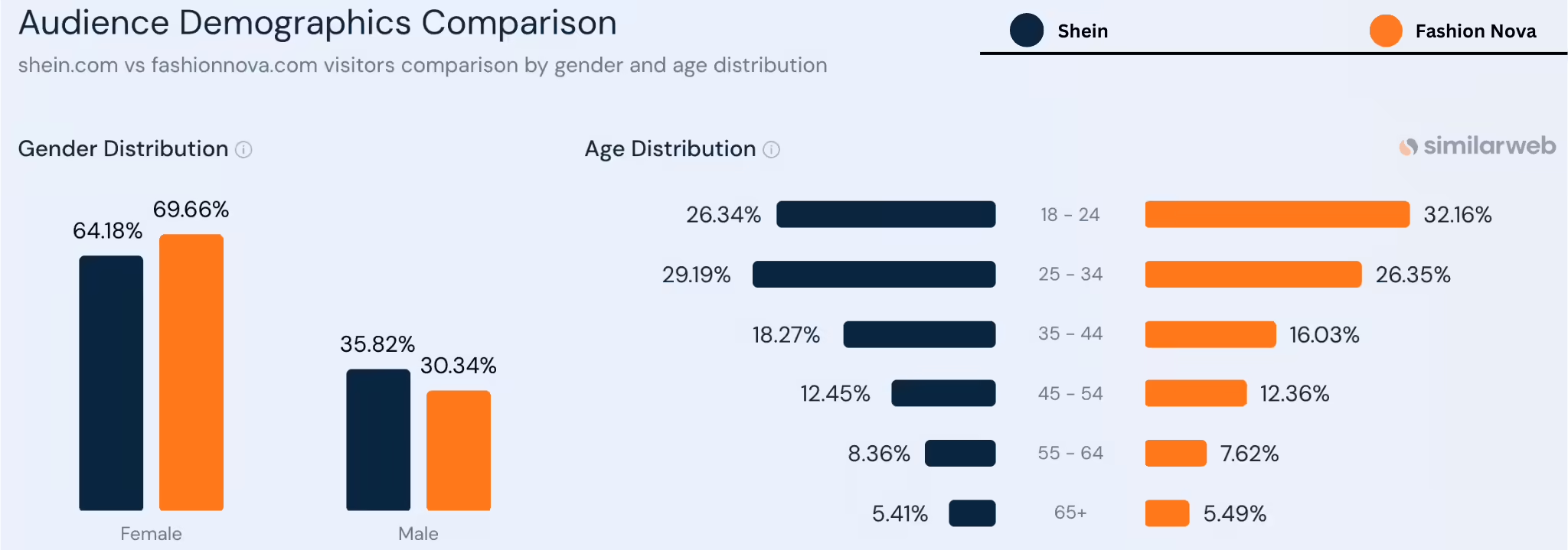
Shein and Fashion Nova have distinct userbase demographics, showcasing differences in gender and age distribution. Shein’s customer base is more evenly split between genders, with females representing 65% and males 35%. On the other hand, Fashion Nova’s userbase skews more heavily towards females, making up 70% of their customers, while males account for the remaining 30%.
Regarding age groups, Shein attracts a larger percentage of users from the 25-34 age range (29.19%) compared to Fashion Nova’s 25-34 age group percentage (26.35%). Similarly, Shein has a higher representation of customers from the 35-44 age group (18.27%) compared to Fashion Nova’s 16.03%.
However, Fashion Nova outperforms Shein in attracting customers from the 18-24 age group, with 32.16% compared to Shein’s 26.34%. Additionally, Fashion Nova has a slightly higher percentage of customers in the 45-54 age group (12.36%) compared to Shein’s 12.45%.
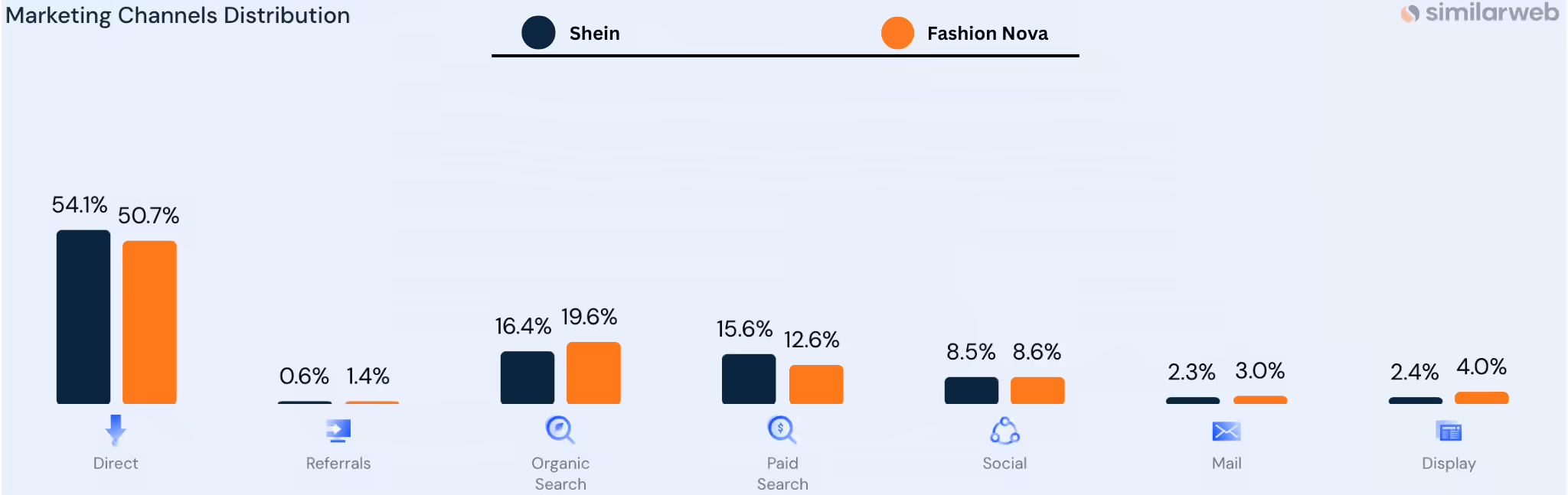
Source: SimilarwebSource: Similarweb
Market Trends and Consumer Behavior in the Fashion Industry
The rise of online shopping: The rise of online shopping has been a major driver of growth in the fast fashion industry. This is because online shopping allows consumers to easily purchase fast fashion clothing from the comfort of their own homes. Additionally, online retailers often offer lower prices than brick-and-mortar stores, which makes fast fashion even more affordable for consumers.
According to a report by Statista, the global online fashion retail market is expected to reach $821.05 billion by 2025. This growth is being driven by the increasing popularity of online shopping, the growing middle class in emerging markets, and the increasing demand for affordable clothing.
The growing popularity of social media: Social media has also played a major role in the growth of the fast fashion industry. Brands use social media to promote their products and to connect with consumers. This has led to a younger and more engaged customer base for fast fashion brands. Additionally, social media allows brands to quickly and easily share new products and trends with consumers.
A study by GlobalWebIndex found that 72% of internet users use social media. This means that there is a large and growing audience for brands that use social media to promote their products. Social media is also a great way for brands to connect with consumers and to build relationships with them.
The increasing demand for affordable clothing: The increasing demand for affordable clothing is another major driver of growth in the fast fashion industry. This is because consumers are increasingly looking for ways to save money, and fast fashion brands offer their products at a very affordable price. Additionally, the growing middle class in emerging markets is also driving the demand for affordable clothing.
According to a report by Euromonitor International, the global market for affordable clothing is expected to reach $2.7 trillion by 2023. This growth is being driven by the growing middle class in emerging markets, the increasing demand for trendy clothing, and the increasing willingness of consumers to sacrifice quality for price.
The trend towards sustainability: The trend towards sustainability is also having an impact on the fast fashion industry. Consumers are becoming more aware of the environmental impact of fast fashion, and this is leading to a growing demand for sustainable fashion. Brands are responding to this demand by introducing sustainable materials, reducing waste, and implementing recycling programs.
A study by Nielsen found that 66% of consumers are willing to pay more for sustainable products. This trend is being driven by the increasing awareness of the environmental impact of fast fashion. Brands are responding to this demand by introducing sustainable materials, reducing waste, and implementing recycling programs.
The increasing personalization: The increasing personalization is also a major trend in the fast fashion industry. Brands are increasingly using personalization to attract and retain customers. This includes offering custom sizing, personalized recommendations, and other personalized services. Personalization allows brands to provide a more tailored and relevant experience for their customers, which can lead to increased sales and customer loyalty.
A study by McKinsey & Company found that 70% of consumers are more likely to shop with brands that offer personalized experiences. This trend is being driven by the increasing use of data and technology. Brands are using this data to create personalized recommendations, to tailor their marketing campaigns, and to provide personalized customer service.
Factors Contributing to Shein’s Growth
Digital Marketing and Social Media Strategies
Shein has gained significant traction among young consumers through influencer marketing campaigns. These campaigns involve partnering with social media personalities who promote the brand to their followers through sponsored posts and collaborations.
Influencer Marketing Campaigns
One successful example of an influencer marketing campaign by Shein was their collaboration with Kylie Jenner. Kylie posted several photos of herself wearing Shein clothes on her Instagram account, which reached millions of her fans. This partnership helped increase awareness of the brand among younger audiences and drove sales through promo codes offered exclusively to Kylie’s followers.
Shein has also worked with other prominent influencers such as Danielle Cohn, Jordyn Woods, and Amanda Cerny. These influencers often post pictures of themselves wearing Shein clothes while tagging the brand and using promotional hashtags. Their large following helps drive traffic to Shein’s website and increases brand recognition among potential customers.
Influencer marketing campaigns have proven effective for Shein because they tap into the power of word-of-mouth recommendations from trusted sources. When influencers endorse a product, their followers are more likely to take notice and consider trying it themselves. Additionally, working with micro-influencers who have smaller but highly engaged followings can also be beneficial since their audience tends to be more loyal and interested in similar content.
However, there are risks involved with relying heavily on influencer marketing campaigns. For instance, if an influencer were to experience negative publicity or fall out of favor with their followers, it could negatively impact the brand’s reputation. Moreover, relying solely on influencer marketing may not reach all demographics effectively, potentially limiting the brand’s overall appeal.
SHEGLAM Influencer Program #SHEINGal
SHEGLAM Influencer Program is a marketing initiative by the SHEGLAM brand to collaborate with influencers to promote their products and services to their followers. The program offers a variety of benefits to influencers, including:
Commissions on sales: Influencers earn a commission on every sale that is generated through their unique referral link.
Free products: Influencers receive free products from SHEGLAM to promote on their channels.
Exposure to a large audience: SHEGLAM has a large following on social media, so influencers have the opportunity to reach a large audience through the program.
Brand exposure: Influencers can build their brand and reputation by collaborating with a well-known brand like SHEGLAM.
To participate in the SHEGLAM Influencer Program, influencers must meet the following criteria:
Have a minimum of 10,000 followers on Instagram or TikTok.
Be active on social media and post regularly.
Create engaging and creative content.
Be able to promote SHEGLAM products and services in a positive and authentic way.
Social Media Platforms Utilized
Shein utilizes various social media platforms such as Instagram, TikTok, Facebook, Twitter, Pinterest, and YouTube to promote its apparel and accessory collections. Some ways in which Shein uses these platforms include:
Content creation: Shein regularly posts visually appealing photos and videos featuring its latest designs, trendy outfits, and style inspiration on all major social media channels. Most of the posts of Shein on its instagram account are user-generated content, out of which the majority ones are of women aged 18-36. This helps build interest and excitement around the brand’s offerings.
Collaboration with influencers: Shein frequently teams up with popular influencers across different industries (e.g., fashion bloggers, beauty gurus) to showcase its products and tap into their large followings. These collaborations often result in sponsored posts and shoutouts on social media.
User-generated content: Encouraging customers to share pictures of themselves wearing Shein items on social media platforms like Instagram and TikTok allows Shein to leverage user-generated content to enhance its online reputation and influence purchases.
Contests and giveaways: Running contests and giveaways on multiple social media platforms can help generate buzz and engagement around Shein’s products. Participants typically need to tag friends or post pictures using Shein merchandise to enter.
Promotional offers: Regularly posting limited time sales, coupon codes, and other special deals on social media keeps existing customers engaged and attracts new ones looking for budget-friendly options.
Video content: Creating entertaining and informative video tutorials, hauls, and reviews related to Shein’s products can appeal to visual and interactive learners on platforms like YouTube.
Hashtag campaigns: Using relevant and memorable hashtags like #SheINHaul, #SheINspiredMe or #MyEverydayStyle can unite user-generated content under one umbrella and amplify Shein’s impact on social media.
Customer service: Maintaining an active presence on social media platforms enables Shein to respond quickly to customer queries, feedback, and complaints, improving its public image and customer satisfaction.
Shein employs several content creation and engagement strategies to reach and engage with its target audience. Here are some of the key strategies:
Micro-influencer marketing: Shein collaborates with micro-influencers who have a couple hundred to a couple thousand followers on platforms like Instagram, YouTube, and TikTok. These influencers receive free products from Shein and can earn up to 10 to 20% commission from referral sales.
Collaborations with Western celebrities: Shein partners with Western celebrities who are popular among young people, such as Katy Perry, Lil Nas X, Rita Ora, Nick Jonas, and Hailey Bieber. These collaborations help Shein reach a wider audience and create buzz around their brand.
Working with bloggers and influencers: Shein offers an easy and convenient working experience for bloggers, influencers, and YouTubers. They receive a flat rate per video profit, which makes it attractive for content creators to collaborate with Shein.
Social media marketing: Shein utilizes social media platforms like Instagram, Facebook, Twitter, and TikTok to showcase their products and engage with their audience. They share user-generated content, model shots, and beautiful product shots on different platforms based on the preferences of their target audience.
Body positivity: Shein embraces body positivity and has dedicated sections for plus-sized clothes. They celebrate plus-size models, which sets them apart from other companies and resonates with a diverse range of customers.
User-generated content (UGC): Shein encourages its customers to share their outfits and style references through a style gallery. This UGC helps create an engaged community and provides social proof for potential customers.
Affiliate program: Shein’s affiliate program allows anyone to become an affiliate and generate income. This strategy helps Shein build and retain its consumer base while also leveraging free marketing from affiliates.
Overall, Shein’s content creation and engagement strategies involve leveraging influencers, collaborating with celebrities, utilizing social media platforms, promoting body positivity, and encouraging user-generated content. These strategies have contributed to Shein’s success in the fashion e-commerce industry.
Youtube’s Contribution in Branding
Shein benefits tremendously when popular vloggers produce content centered around TRYON days because these authentic, relatable experiences cater effectively to target audience members struggling to rationalize allocating significant sums towards high-priced luxury goods lacking visible differences from budgetary alternatives. For avid shoppers already intrigued about browsing through fast-fashion offerings or wishlisting items without immediate intentions towards spending anything extra during routine web surfs, witnessing fellow followers enjoy gratuitous spoils while providing valuable feedback regarding quality control parameters further enhances trustworthiness associated with using Shein services rather than assuming a gamble equated to getting duped after pledging money supposedly reserved for better brands whose price tags usually correspond to inflated manufacturing costs instead of desirable merchandise actually warranting elevated expenses.
Influenced visitors then convert to customers once enticing circumstances arise, leading to increased customer lifetime values capable of fueling greater long-term impact compared to costly paid advertisements reaching broader but often less engaged audiences through traditional mass mediums. Ultimately, leveraging user-generated content (UGC) to drive organic growth through virality results in magnified returns on investment spent developing partnerships yielding strong synergistic effects between both parties due to mutual understanding concerning desired targets and ideal strategies necessary in order to succeed together under agreed terms.
According to research conducted by IRI Worldwide, consumers who receive free samples in stores demonstrate a 78.5% higher conversion rate compared to non-sampled patrons exhibiting equal shopping intentions under regular conditions where they would have to purchase all items themselves. This suggests that offering complimentary trials promoting product familiarity drives successful purchases at much stronger rates regardless of any underlying loyalty program involvement.
An article published by McKinsey entitled “Getting Big Impact from Your Next Marketing Experiment” states how controlled experiments testing different messages against representative consumer segments can increase the likelihood of identifying winning concepts ahead of implementing full-scale initiatives across entire campaigns or brand portfolios.
Furthermore, even marginal improvements derived from smart segmentation allow marketers to spend proportionally smaller amounts versus industry averages for more effective campaign ROIs due to narrowed focus resulting in higher engagement / memorability factors benefitting from scarce funds allocated more efficiently than larger competitors following broad conventional frameworks unable to adapt quickly enough to rapidly changing consumer preferences shifting beneath corporations too large to pivot adequately.
Data compiled by Nielsen Catalina Solutions highlights how U.S. households participating in digital loyalty programs generate average basket sizes totaling $2,637 annually versus typical participants not taking advantage of such platforms recording an annual sum slightly lower at $2,536. When cross-referenced with a similar analysis performed in the UK revealing £100 average increases separating engaged users earning loyalty rewards from disengaged customers only qualifying when they reached minimum thresholds needed to trigger basic discount tiers applied indiscriminately across wider clientele ranges, it becomes apparent why retailers should strive to maintain active reward schemes focused on driving incremental selling above existing baselines predetermined by current customer behavior alone.
This strategy offsets negative impacts stemming from fierce competition pressuring gross margins by reducing overheads normally attributed to inefficient blanket promotions broadcasting messages nobody hears past initial interest grabbed immediately after launch.
SheIn’s Bonus Point System
Shein’s Bonus Point system is designed to reward customers for their engagement and loyalty, encouraging them to make more purchases and actively participate in various activities on the platform. Here’s how it works and how it helps Shein’s growth:
Earning Bonus Points:
New Registrations: Customers receive 100 points for verifying their email upon registration.
Purchases: Customers earn 1 point for every US Dollar spent on eligible purchases (excluding taxes, shipping, and fees). Points are credited once the order delivery is confirmed.
Product Reviews: Customers can earn 5 points for posting a review with a minimum text requirement, and an additional 10 points if the review includes a photograph. Extra 2 points are rewarded for reviews that include size information.
Participating in Activities: Points can be earned by participating in various site activities, such as daily check-ins, SHEIN Live streaming events, daily marketing activities, and contests.
Points Redemption:
Every 100 points earned can be redeemed for $1 on the total price of an order (excluding tax, shipping, and insurance). Points with the earliest expiration date are applied first.
Customers can also use points to redeem coupons during special events or for game opportunities.
Points Return:
If an unpaid order is canceled, the points applied to the original order are immediately returned to the customer’s account.
If an order is returned, the points used for that order are returned to the customer’s account along with the refund or credit.
Expired points are not returned if the order or product return occurs after the points’ expiration date.
How it helps Shein’s growth?
Shein’s Bonus Point system contributes to the company’s growth in several ways:
Customer Loyalty: The Bonus Point system fosters customer loyalty by incentivizing repeat purchases and active engagement with the platform. Customers are encouraged to return and participate in various activities, leading to higher customer retention.
Increased Engagement: By rewarding customers for leaving reviews and participating in activities, Shein encourages higher engagement levels on its website and app. This increased interaction not only drives more purchases but also generates valuable user-generated content and reviews.
Data Collection: The system provides valuable insights into customer preferences and behavior. Shein can analyze the data from product reviews, purchases, and other activities to improve its product offerings, marketing strategies, and overall customer experience.
Competitive Advantage: The Bonus Point system sets Shein apart from competitors by offering an attractive loyalty program. This can attract new customers and motivate existing ones to choose Shein over other similar platforms.
Increased Sales: With customers earning points for purchases, they are more likely to spend more to accumulate points, thereby increasing the average order value and overall sales for Shein.
Shein’s Bonus Point system serves as a powerful tool for customer retention, engagement, and increased sales. By rewarding customers for their loyalty and interaction, Shein can foster a strong and active customer base, leading to sustainable growth in the highly competitive online retail market.
SheIn’s Influencer Network
Shein collaborates with diverse groups of ambassadors ranging from popular bloggers, YouTubers, models, stylists, photographers, artists, dancers, beauty professionals, musicians, comedians, public speakers, educators, entrepreneurs, activists, philanthropists…the list goes on since anyone passionate enough to share their creative vision meriting representation through Shein could join the alliance depending on resonant goals. However, here are some statistics associated with their notable microinfluencers, followed accounts exceeding 10k fans typically receiving free products, early previews or priority access before releasing official images / videos showcasing select pieces featured alongside #shopshein:
As of February 2023, Shein counts over 50 thousand+ global microinfluencers on various social media channels.
While exact percentages fluctuate regularly due to adjustments made to accommodate burgeoning talent pools as well as streamline interactions given resource constraints, approximately:
69% reside in North America (United States and Canada)
27% live in Asia Pacific areas including Australia, New Zealand, China, Japan, Korea, India, Singapore, Malaysia, Vietnam, Thailand, Indonesia, Philippines, Taiwan, Hong Kong…
4% occupy Europe primarily located within United Kingdom, France, Germany, Italy, Spain, Netherlands, Belgium, Poland, Switzerland, Austria… although additional Central Eastern European territories might belong to Asia Pacific region under certain definitions.
The remaining fraction signifying less than half of a percent represents Latin American residents scattered throughout Mexico, Argentina, Brazil, Chile, Colombia, Ecuador, Peru, Uruguay, Paraguay, Venezuela, Cuba, Dominican Republic, Puerto Rico, Bahamas, Jamaica, Trinidad & Tobago, Costa Rica, Panama, Honduras, El Salvador, Nicaragua, Guatemala, Belize, Guyana – or potential Caribbean nations nearby.
Pricing and Affordability
Shein is known for its affordable prices. The average price of a garment on Shein is around $10. This is significantly lower than the average price of a garment at other fast fashion retailers, such as Zara or H&M.
Shein’s affordable prices are possible because the brand operates a vertically integrated supply chain. This means that Shein owns its own factories and controls all aspects of the production process. This allows Shein to cut costs and pass those savings on to consumers.
Competitive Pricing Strategy
Shein’s competitive pricing strategy is based on two key principles:
Low prices: Shein offers some of the lowest prices in the fast fashion industry. This is a major factor in the brand’s success.
Frequent sales and discounts: Shein runs frequent sales and discounts, which allows it to offer even lower prices to consumers. This helps to keep Shein’s products top of mind and drives sales.
Sales Promotions and Discounts
Shein offers a variety of sales promotions and discounts, including:
Flash sales: Shein runs flash sales on a regular basis, during which prices are slashed for a limited time.
Coupon codes: Shein often offers coupon codes that can be used to save money on purchases.
Free shipping: Shein offers free shipping on orders over a certain amount.
Customer Value Perception
Shein’s customers generally perceive the brand to be a good value for the money. This is due to the brand’s low prices, frequent sales and discounts, and wide selection of products.
A study by Coresight Research found that 70% of Shein shoppers believe that the brand offers good value for the money. The study also found that 60% of Shein shoppers are willing to spend more on Shein products than on products from other fast fashion retailers.
These findings suggest that Shein’s pricing and value proposition are resonating with consumers. This is a major factor in the brand’s success.
SheIn VIP Program
Shein VIP refers to the loyalty program offered by Shein, which allows customers to earn points that can be redeemed for discounts and other perks. By participating in the program, customers may enjoy exclusive access to sales events, early access to new arrivals, personalized customer service, and more. Additionally, Shein VIP members receive special birthday offers and surprise gifts throughout the year.
In terms of helping Shein grow, the VIP program encourages repeat business from satisfied customers who appreciate the added value they receive through their participation. This can lead to increased brand loyalty and positive word-of-mouth marketing as these customers share their experiences with others. Furthermore, data collected from VIP participants can help Shein better understand their target audience and tailor future offerings accordingly, leading to further growth opportunities.
According to Shein’s website, VIP members save up to 50% off retail prices across all categories.
In addition, Shein reports that VIP members receive free shipping on all orders over $39 USD/£48 GBP/$62 AUD/$71 CAD/$78 NZD.
Data shows that repeat purchases accounted for approximately 60% of total sales volume at Shein during Q1 2022.
Shein has experienced significant growth since launching its VIP program in 2018. For example, the company reported a net profit margin of 10.2% in Q1 2022 compared to 9.3% in Q1 2019.
Shein’s active user base grew by 14.3 million users YoY in Q1 2022, reaching a total of 136.4 million registered users worldwide.
These figures suggest that Shein’s VIP program plays a key role in driving customer engagement and loyalty, ultimately contributing to the company’s overall financial performance and growth. However, it’s worth noting that correlation does not necessarily imply causation and other factors such as product quality, pricing strategy, and marketing efforts likely contribute to Shein’s success as well.
SheIn Student Discount Program
Shein offers a student discount program that allows students to enjoy savings on their purchases. Here’s what you need to know about Shein’s student discount program:
Discount amount: Shein offers a 15% discount to students.
Verification process: To claim the student discount, students need to verify their student status through UNiDAYS, a student verification platform. They will need to fill out the verification form with their official school email address. Once verified, they will gain access to an exclusive 15% off student discount code from Shein.
Eligibility: The student discount is available to all students who are currently enrolled at a university or college. Students will need a university email address to verify their student status at UNiDAYS.
Combining discounts: Students can maximize their savings by combining the 15% off student discount with ongoing sales and free shipping offers. Additionally, signing up for an account at Shein allows students to earn rewards on every purchase, providing further opportunities for savings.
Shein’s student discount program helps attract and retain student customers by offering them a discount on their purchases. This program not only provides financial benefits to students but also encourages them to shop with Shein and take advantage of ongoing sales and rewards programs. By catering to the student demographic, Shein also taps into a market segment that is known for its fashion-consciousness and purchasing power, contributing to the company’s growth and success.
How Student Discount Program Benefits Shein?
Shein’s student discount program is a marketing strategy that taps into the psychology of student consumers. Here are some of the psychological factors that may be behind the success of Shein’s student discount program:
Sense of exclusivity: Shein’s student discount program creates a sense of exclusivity for students who are able to access the discount. This can make students feel special and valued, which can help build brand loyalty and encourage repeat purchases.
Perceived value: Students are often on a tight budget, and the 15% discount offered by Shein can make a significant difference in their purchasing decisions. By offering a discount, Shein is able to provide students with a sense of value and affordability, which can help attract and retain student customers.
Social influence: Students are often influenced by their peers and social networks. By offering a student discount, Shein can tap into the power of social influence and encourage students to share their purchases with their friends and followers on social media, which can help spread awareness of the brand and attract new customers.
Incentive to purchase: Shein’s student discount program provides an incentive for students to make a purchase. By offering a discount, Shein can encourage students to take action and make a purchase, which can help increase sales and revenue for the company.
Overall, Shein’s student discount program leverages the psychology of student consumers by creating a sense of exclusivity, providing perceived value, tapping into social influence, and offering an incentive to purchase. By catering to the needs and preferences of student consumers, Shein attracts and retains this market segment, contributing to the company’s growth and success in the fast-fashion industry
Supply Chain and Logistics
Shein has a vertically integrated supply chain, which means that it owns its own factories and controls all aspects of the production process. This allows Shein to have a high degree of control over its supply chain and to respond quickly to changes in demand.
Shein’s supply chain is also very efficient. The brand uses a just-in-time inventory system, which means that it only produces products as they are needed. This helps to reduce waste and to keep costs down.
Inventory Management and Fulfillment Processes
Shein uses a sophisticated inventory management system to track its inventory levels and to ensure that it has the right products in the right place at the right time. The brand also uses a variety of fulfillment methods, including:
Direct to consumer: Shein ships products directly to consumers from its own warehouses.
Third-party fulfillment: Shein partners with third-party logistics companies to ship products to consumers.
Global sourcing and manufacturing strategies
Shein sources its products from a variety of countries, including China, Bangladesh, and India. The brand uses a variety of manufacturing strategies, including:
In-house manufacturing: Shein owns its own factories in China.
Contract manufacturing: Shein contracts with third-party manufacturers to produce its products.
International shipping and delivery capabilities
Shein ships products to over 200 countries and territories. The brand offers a variety of shipping options, including:
Free shipping: Shein offers free shipping on orders over a certain amount which varies from country to country.
Express shipping: Shein offers express shipping for a fee.
Standard shipping: Shein offers standard shipping for a fee.
Shein’s shipping times vary depending on the shipping option selected. However, the brand generally ships products within 1-7 days of receiving an order.
Facts and Figures
Shein’s supply chain is one of the most efficient in the world.
The brand has a global network of warehouses that allows it to ship products to customers all over the world.
Shein’s inventory management system is one of the most sophisticated in the industry.
The brand uses a variety of fulfillment methods to ensure that products are delivered to customers quickly and efficiently.
Shein’s shipping times are some of the fastest in the industry.
These are just a few of the facts and figures about Shein’s supply chain and logistics. The brand’s supply chain is a major factor in its success. It allows Shein to offer low prices, fast shipping, and a wide selection of products.
Customer Experience and Retention
Shein has a strong focus on customer experience. The brand strives to provide a positive and enjoyable shopping experience for its customers. This includes:
A wide selection of products at affordable prices
Fast and efficient shipping
A user-friendly website and app
Excellent customer service
Shein’s customer retention rate is very high. This is due to the brand’s focus on customer satisfaction. Shein regularly surveys its customers to get feedback on their shopping experience. The brand then uses this feedback to improve its products and services.
User Interface and Website Design
Shein’s website and app are designed to be user-friendly and easy to navigate. The website is well-organized and easy to find what you are looking for. The app is also well-designed and easy to use.
The website and app are both responsive, which means that they can be used on desktop computers, laptops, tablets, and smartphones. This makes it easy for customers to shop from Shein no matter where they are.
Customer Service and Support
Shein offers excellent customer service. The brand has a team of customer service representatives who are available 24/7 to answer questions and resolve issues.
Customers can contact Shein customer service by phone, email, or live chat. The brand also has a comprehensive FAQ section on its website.
Return and Refund Policies
Shein has a generous return and refund policy. Customers can return items for a full refund within 35 days of purchase in USA.
The return process is simple and easy. Customers can return items by mail or in-store.
Shein also offers a free return shipping label for orders over a certain amount.
Facts and Figures
Shein has a customer retention rate of over 80%.
The brand’s website receives over 100 million visitors per month.
Shein’s app has been downloaded over 100 million times.
The brand has a team of over 10,000 customer service representatives.
Shein offers a 35-day return and refund policy in USA.
These are just a few of the facts and figures about Shein’s customer experience and retention. The brand’s focus on customer satisfaction is a major factor in its success.
Future Growth Prospects
Shein is a rapidly growing brand with a strong track record of success. The brand is expected to continue to grow in the future.
Potential Opportunities for Shein’s Growth
Shein has a number of potential opportunities for growth. These include:
Expansion into new product categories: Shein could expand into new product categories, such as home goods, accessories, and beauty products. This would allow the brand to reach a wider audience and to grow its sales.
Emerging markets and untapped customer segments: Shein could expand into emerging markets and untapped customer segments, such as Gen Z and millennials. This would allow the brand to reach a new audience and to grow its sales.
Partnerships and collaborations: Shein could partner with other brands, such as celebrities or influencers. This would allow the brand to reach a new audience and to grow its sales.
Expansion into New Product Categories
Shein has already expanded into a number of new product categories, including home goods, accessories, and beauty products. The brand is likely to continue to expand into new product categories in the future.
Emerging Markets and Untapped Customer Segments
Shein is already present in a number of emerging markets, such as India and Southeast Asia. The brand is likely to continue to expand into emerging markets in the future. Shein is also targeting new customer segments, such as Gen Z and millennials.
Partnerships and Collaborations
Shein has partnered with a number of brands, such as Moschino and Crocs. The brand is likely to continue to partner with other brands in the future.
Shein is well-positioned for future growth. The brand has a strong track record of success, a wide range of opportunities, and a clear vision for the future.
Key Challenges and Risks for Future Growth
Shein faces a number of challenges and risks for future growth. These include:
Competitive pressures and market saturation: Shein faces increasing competition from other fast fashion retailers. The market for fast fashion is also becoming increasingly saturated.
Regulatory and compliance issues: Shein faces regulatory and compliance issues in different markets. These issues can make it difficult for the brand to operate in these markets.
Adapting to changing consumer preferences: Consumer preferences are changing, and Shein needs to adapt its products and marketing strategies to meet these changing preferences.
Competitive Pressures and Market Saturation
The fast fashion market is becoming increasingly competitive. This is due to the entry of new brands and the expansion of existing brands. The market is also becoming increasingly saturated, as there are now many brands offering similar products.
This competitive pressure is likely to continue in the future. This means that Shein will need to continue to innovate and offer new products and services to stay ahead of the competition.
Regulatory and Compliance Issues
Shein faces regulatory and compliance issues in different markets. These issues can make it difficult for the brand to operate in these markets.
For example, Shein has been accused of using child labor in its factories. This is a serious allegation that could damage the brand’s reputation and lead to legal action.
Shein also faces regulatory issues in the United States. The Federal Trade Commission (FTC) is investigating Shein for potential violations of consumer protection laws.
Adapting to Changing Consumer Preferences
Consumer preferences are changing, and Shein needs to adapt its products and marketing strategies to meet these changing preferences.
For example, consumers are becoming more concerned about the environmental impact of fast fashion. Shein will need to address these concerns if it wants to continue to attract and retain customers.
Shein also needs to adapt its marketing strategies to reach new customers. For example, the brand is increasingly using social media to reach Gen Z and millennial consumers.
Shein is well-positioned to address these challenges and risks. The brand has a strong track record of innovation and adapting to change. Shein is also committed to compliance with all applicable laws and regulations.
However, the brand will need to continue to innovate and adapt to meet the changing needs of consumers. If Shein can do this, it is well-positioned for continued growth in the future.
Conclusion
Shein’s rise to prominence in the fashion e-commerce industry is a testament to its innovative approach and unwavering dedication to meeting customer needs. From its engaging content creation strategies to its enticing student discount program, Shein has successfully captured the attention and loyalty of its target audience. Moreover, its efficient supply chain, user-friendly interface, and exceptional customer service have further contributed to its rapid growth and success. As the fashion industry continues to evolve, Shein remains poised to adapt and thrive, continuing to set trends and redefine the boundaries of fast fashion.
Tell us in comments which brand’s marketing secrets you want us to uncover. 🙂
Frequently Asked Questions about Shein’s Marketing Strategy
Color is an essential element of branding and marketing that can significantly impact consumer behavior. Different colors evoke various emotions and can influence how people perceive your brand, making it crucial to understand the psychology of color. In this section, we will explore the impact of color on branding and marketing.
The Basics of Color Psychology
Color psychology is the study of how different colors affect human behavior. It is a crucial aspect of branding and marketing, as colors can evoke various emotions and influence consumer behavior. Understanding the psychology of color can help you choose the right colors for your brand and create a strong emotional connection with your audience.
Colors can be broadly classified into warm and cool colors. Warm colors include red, orange, and yellow, while cool colors include blue, green, and purple. Warm colors are associated with energy, excitement, and passion, while cool colors are associated with calmness, relaxation, and trustworthiness.
The Impact of Colors on Branding and Marketing
Red
Red is a powerful and attention-grabbing color that is associated with passion, energy, and excitement. It is often used in marketing to create a sense of urgency or to promote products that evoke strong emotions. Brands that use red in their branding include Coca-Cola, Netflix, and YouTube.
Orange
Orange is a warm and inviting color that is associated with creativity, enthusiasm, and warmth. It is often used in marketing to create a sense of playfulness or to promote products that are fun. Brands that use orange in their branding include Nickelodeon, Fanta, and Harley-Davidson.
Yellow
Yellow is a bright and cheerful color that is associated with happiness, optimism, and friendliness. It is often used in marketing to create a sense of positivity or to promote products that are associated with happiness. Brands that use yellow in their branding include McDonald’s, Best Buy, and Nikon.
Green
Green is a calming and refreshing color that is associated with growth, health, and nature. It is often used in marketing to create a sense of relaxation or to promote products that are eco-friendly. Brands that use green in their branding include Whole Foods, Animal Planet, and Starbucks.
Blue
Blue is a calming and trustworthy color that is associated with stability, trust, and calmness. It is often used in marketing to create a sense of security or to promote products that are reliable. Brands that use blue in their branding include Facebook, American Express, and Ford.
Purple
Purple is a royal and luxurious color that is associated with creativity, luxury, and sophistication. It is often used in marketing to create a sense of elegance or to promote high-end products. Brands that use purple in their branding include Cadbury, Hallmark, and Yahoo.
Black
Black is a powerful and sophisticated color that is associated with elegance, power, and authority. It is often used in marketing to create a sense of exclusivity or to promote high-end products. Brands that use black in their branding include Chanel, Rolls-Royce, and Mont Blanc.
White
White is a pure and innocent color that is associated with simplicity, cleanliness, and clarity. It is often used in marketing to create a sense of purity or to promote simplicity. Brands that use white in their branding include Apple, Nike, and Dove.
Pink
Pink is a feminine and playful color that is associated with romance, love, and happiness. It is often used in marketing to create a sense of femininity or to promote products that are targeted towards women. Brands that use pink in their branding include Barbie, Victoria’s Secret, and T-Mobile.
Brown
Brown is a warm and earthy color that is associated with nature, stability, and reliability. It is often used in marketing to create a sense of warmth or to promote products that are associated with the outdoors. Brands that use brown in their branding include UPS, Timberland, and M&M’s.
Gray
Gray is a neutral and sophisticated color that is associated with professionalism, elegance, and formality. It is often used in marketing to create a sense of sophistication or to promote products that are associated with business or formal events. Brands that use gray in their branding include Mercedes-Benz, Apple, and Adobe.
Gold
Gold is a luxurious and prestigious color that is associated with wealth, prosperity, and success. It is often used in marketing to create a sense of exclusivity or to promote high-end products or services. Brands that use gold in their branding include Rolex, American Express, and Cadillac.
Silver
Silver is a modern and sleek color that is associated with innovation, sophistication, and elegance. It is often used in marketing to create a sense of modernity or to promote products that are associated with technology or design. Brands that use silver in their branding include Samsung, Mercedes-Benz, and Audi.
Other Colors
Apart from the colors mentioned above, there are other colors that can be used in branding and marketing. For instance, turquoise is a color that is associated with tranquility, while peach is associated with femininity and sweetness. Coral is associated with fun and excitement, while lavender is associated with relaxation and calmness.
Case Study: Psychology of Color in Branding and Marketing of 30 Unique Global Companies
Color plays a significant role in branding and marketing strategies as it has the power to evoke emotions, influence perception, and enhance brand recognition. In this comprehensive case study, we will delve into the psychology of color in the branding and marketing efforts of 30 unique and globally recognized companies. By analyzing their color choices and understanding their potential psychological effects, we can gain deeper insights into how these companies strategically leverage color to communicate their brand identity, connect with their target audiences, and establish a competitive edge in their respective industries.
Methodology
To conduct this case study, we conducted a thorough analysis of the branding and marketing materials of 30 globally recognized companies from various industries, including technology, food and beverage, retail, and entertainment. We focused on their logos, website designs, product packaging, and advertisements to understand the consistent use of color and its potential impact on consumer perception and brand recognition. Additionally, we conducted research to explore the underlying psychological associations and cultural meanings attached to different colors.
Findings:
Apple: Apple’s branding primarily uses black, a color often associated with simplicity, class, and innovation. The choice of black aligns with their brand identity of clean and classy design, appealing to their target market of tech-savvy individuals seeking sophisticated and user-friendly products. Black also symbolizes the seamless integration and user experience that Apple strives to provide across its range of devices and services.
Apple Logo
Coca-Cola: The Coca-Cola logo is predominantly red, which is known to evoke strong emotions such as excitement, passion, and energy. The strategic use of red helps Coca-Cola create a sense of urgency and stimulate consumers’ thirst, making it an iconic color in the beverage industry. Red also symbolizes the brand’s dynamic personality and its commitment to creating refreshing and enjoyable moments for its consumers.
CocaCola Logo
Google: Google’s logo features a combination of primary colors: blue, green, yellow, and red. This playful use of colors reflects their brand identity as a vibrant, diverse, and creative company, appealing to a wide range of users across different demographics. Each color in Google’s logo represents a specific aspect of their business, with blue symbolizing reliability and trustworthiness, green representing growth and innovation, yellow conveying optimism and friendliness, and red adding a touch of excitement and energy.
Google Logo
McDonald’s: McDonald’s iconic golden arches are primarily yellow, a color associated with happiness, optimism, and appetite stimulation. The use of yellow in their branding and packaging helps create a warm and inviting atmosphere, encouraging customers to associate positive emotions with their fast-food experience. Yellow also symbolizes the brand’s commitment to providing a joyful and satisfying dining experience for customers of all ages.
McDonald’s Logo
Facebook: Facebook’s logo prominently features the color blue, which conveys trust, reliability, and professionalism. Blue is also associated with communication and technology, aligning with Facebook’s mission of connecting people worldwide through its social media platform. The use of blue helps establish Facebook as a trustworthy and credible platform for sharing information and fostering meaningful connections.
Facebook Logo
Nike: Nike’s logo uses the color black, symbolizing power, strength, and sophistication. Black creates a sense of exclusivity and luxury, appealing to athletes and individuals seeking high-performance and stylish athletic wear. Black also represents the brand’s commitment to excellence and its ability to empower individuals to push their limits and achieve their goals.
Nike Logo
Amazon: Amazon’s logo combines the colors black and orange. Black conveys reliability and authority, while orange evokes energy and enthusiasm. This combination suggests Amazon’s commitment to delivering a seamless and exciting online shopping experience. The use of black also signifies the brand’s vast product range and its ability to cater to diverse customer needs, while orange adds a vibrant and approachable touch to the brand’s identity.
Amazon Logo
Pepsi: Pepsi’s branding revolves around a red, white, and blue color scheme. Red and blue evoke excitement and trust, respectively, while white adds a sense of purity and cleanliness. This combination creates a strong visual impact, positioning Pepsi as a competitive rival to Coca-Cola. The use of red, white, and blue also conveys a sense of patriotism and American heritage, appealing to a wide audience.
Pepsi Logo
Target: Target’s logo prominently features the color red, which signifies excitement, energy, and affordability. Red helps create a sense of urgency and draws attention to their products, while also communicating a strong brand identity. The use of red in Target’s branding conveys the brand’s commitment to providing a lively and affordable shopping experience, enticing customers to explore their wide range of products.
Target Logo
Starbucks: Starbucks utilizes a deep shade of green in its logo and store designs. Green is associated with freshness, growth, and relaxation, aligning with Starbucks’ commitment to offering high-quality, sustainably sourced coffee in a cozy and inviting atmosphere. Green also symbolizes the brand’s connection to nature and its dedication to ethical practices, resonating with environmentally conscious consumers.
Starbucks Logo
Microsoft: Microsoft’s logo predominantly features the color blue, representing trust, reliability, and professionalism. Blue is commonly associated with technology and software companies, indicating Microsoft’s dedication to providing dependable and user-friendly products. The use of blue also creates a sense of familiarity and comfort, making Microsoft’s offerings more approachable for a wide range of users.
Microsoft Logo
Instagram: Instagram’s logo combines vibrant shades of pink, purple, orange, and yellow. These colors evoke feelings of creativity, inspiration, and joy, reflecting the platform’s focus on visual storytelling and connecting individuals through shared experiences. The use of these lively colors captures the essence of the diverse content shared on Instagram and creates a visually appealing and engaging platform for users.Instagram Logo
BMW: BMW’s logo features a black circle with white and blue segments. Blue signifies reliability and trust, while white conveys purity and elegance. Together, these colors communicate BMW’s commitment to producing high-quality, luxurious, and innovative automobiles. The use of blue also represents the brand’s focus on cutting-edge technology and performance, setting BMW apart as a symbol of status and success.
BMW Logo
FedEx: FedEx utilizes a combination of purple and orange in its logo. Purple represents creativity, royalty, and trust, while orange conveys enthusiasm and energy. This color combination communicates FedEx’s commitment to reliable and efficient package delivery services. The use of purple and orange also creates a distinctive visual identity for the brand, making it easily recognizable and memorable in a competitive industry.
FedEx Logo
IBM: IBM’s logo predominantly features blue, representing trust, dependability, and innovation. As a technology company, the use of blue helps establish credibility and reinforces the company’s brand image as a leader in the industry. Blue also conveys a sense of professionalism and reliability, qualities that are highly valued in the corporate world. IBM’s blue color choice aligns with their mission of providing innovative solutions and cutting-edge technologies to businesses worldwide.
IBM Logo
Twitter: Twitter’s logo features a blue bird, which aligns with the company’s brand identity as a platform for open communication and information sharing. Blue signifies trust, reliability, and transparency, appealing to users seeking real-time updates and engagement. The use of a bird in the logo also conveys a sense of freedom and connectivity, reflecting Twitter’s role as a medium for people to connect, share ideas, and stay informed.
Twitter Logo
Disney: Disney’s branding heavily utilizes the color red, which represents excitement, passion, and adventure. Red is often associated with strong emotions, making it an ideal choice for a company that focuses on creating magical and memorable experiences for both children and adults. The use of red in Disney’s branding evokes a sense of wonder and nostalgia, reinforcing the brand’s association with joy, entertainment, and enchantment.
Disney Logo
UPS: UPS’s logo features a combination of brown and gold. Brown symbolizes reliability, stability, and dependability, while gold adds a touch of elegance and premium quality. This color combination reflects UPS’s commitment to delivering packages promptly and securely. The use of brown also signifies the brand’s long-standing presence in the industry and its ability to handle logistics with utmost care and precision.
UPS Logo
Adobe: Adobe’s logo predominantly features a vibrant shade of red, which represents passion, creativity, and energy. Red is commonly associated with the arts and design, aligning with Adobe’s software products for graphic design, photography, and video editing. The use of red in Adobe’s branding conveys the brand’s dedication to empowering creative professionals and inspiring innovation in the digital realm.
Adobe Logo
Toyota: Toyota’s logo combines red and white. Red symbolizes passion, energy, and excitement, while white conveys purity and reliability. This color combination communicates Toyota’s commitment to manufacturing high-quality, performance-driven vehicles. The use of red also represents the brand’s dynamic and adventurous spirit, appealing to individuals seeking reliable and exhilarating driving experiences.
Toyota Logo
Spotify: Spotify’s branding predominantly uses a vibrant shade of green, representing growth, freshness, and harmony. Green also has calming effects and aligns with Spotify’s mission of providing users with a personalized and soothing music streaming experience. The use of green reflects Spotify’s commitment to connecting users with their favorite music and creating a harmonious environment for music lovers worldwide.
Spotify Logo
Intel: Intel’s logo features a combination of blue and white. Blue represents trust, reliability, and professionalism, while white conveys simplicity and innovation. This color combination reinforces Intel’s position as a leading technology company. The use of blue and white signifies the brand’s dedication to producing advanced and cutting-edge solutions while ensuring the highest standards of quality and performance.
intel Logo
Volkswagen: Volkswagen’s logo primarily uses blue, representing trust, reliability, and loyalty. Blue also aligns with the automotive industry’s associations of stability and safety, reflecting Volkswagen’s commitment to engineering excellence and high-quality manufacturing. The use of blue in Volkswagen’s branding creates a sense of trust and reliability, positioning the brand as a dependable choice for car enthusiasts worldwide.
Volkswagon Logo
Airbnb: Airbnb’s logo predominantly features the colors black and white. Black symbolizes elegance, sophistication, and exclusivity, while white conveys simplicity, purity, and cleanliness. This color combination reflects Airbnb’s brand identity as a provider of unique and luxurious accommodation options. The use of black and white also creates a visually striking and minimalist design, capturing the essence of the brand’s commitment to offering exceptional travel experiences.
Airbnb Logo
PayPal: PayPal’s logo predominantly features blue, representing trust, security, and reliability. Blue is a widely recognized color in the financial industry, signifying stability and professionalism. The use of blue in PayPal’s branding reinforces the brand’s commitment to ensuring safe and seamless online transactions, establishing trust among its users and positioning PayPal as a reputable and secure payment solution.
PayPal Logo
Honda: Honda’s logo primarily uses blue, representing reliability, trustworthiness, and a sense of harmony. Blue is a common color choice in the automotive industry, signifying quality and dependability. The use of blue in Honda’s branding conveys the brand’s commitment to producing reliable and innovative vehicles while creating a sense of tranquility and confidence in their customers.
Honda Logo
Gucci: Gucci’s logo features a combination of black and gold. Black represents power, luxury, and sophistication, while gold adds a touch of opulence and exclusivity. This color combination communicates Gucci’s position as a high-end and prestigious fashion brand. The use of black and gold signifies the brand’s commitment to timeless elegance, impeccable craftsmanship, and creating a sense of luxury for their discerning clientele.
Gucci Logo
LinkedIn: LinkedIn’s logo prominently features the color blue, representing trust, professionalism, and reliability. Blue is commonly associated with corporate environments, aligning with LinkedIn’s focus on professional networking and career development. The use of blue in LinkedIn’s branding conveys a sense of credibility and authority, making it an ideal platform for individuals and businesses to connect, collaborate, and establish professional relationships.
Linkedin Logo
Mastercard: Mastercard’s logo combines the colors red and yellow. Red symbolizes passion, excitement, and energy, while yellow represents optimism and friendliness. This color combination creates a visually appealing and dynamic design, capturing Mastercard’s brand identity as a global payment solution provider. The use of red and yellow also conveys a sense of convenience, reliability, and instant transactions, making Mastercard an essential part of consumers’ everyday lives.
Mastercard Logo
Zara: Zara’s branding primarily uses the color black, representing elegance, sophistication, and timelessness. Black symbolizes luxury and high-end fashion, aligning with Zara’s position as a leading global fashion retailer. The use of black in Zara’s branding conveys a sense of exclusivity and quality, appealing to fashion-forward individuals seeking stylish and trendy clothing options.
Zara Logo
Conclusion
Color is a powerful tool in branding and marketing that can significantly impact consumer behavior. By understanding the psychology of color and using it effectively, you can create a strong emotional connection with your audience and drive more engagement and sales for your brand. Remember to choose colors that are relevant to your brand personality and values, and use them consistently across all your branding and marketing materials.
Frequently Asked Questions Related to Psychology of Color in Branding and Marketing
आज की डिजिटल युग में, ब्लॉगिंग एक शक्तिशाली माध्यम बन गई है जो हमें अपने विचारों को व्यक्त करने, ज्ञान साझा करने और आवाज़ उठाने का अवसर प्रदान करती है। ब्लॉग लिखना न केवल रचनात्मकता को प्रोत्साहित करता है, बल्कि हमें विशेषज्ञता प्रदान करने, उपयोगी सामग्री साझा करने और अनलाइन दुनिया में एक मान्यता प्राप्त करने का माध्यम भी बना सकता है।
इस ब्लॉग में हम आपको संपूर्ण निर्देशिका प्रदान करेंगे जो आपको एक सफल ब्लॉग बनाने में मदद करेगी। हम विषय चयन करने, एसईओ (खोज इंजन अनुक्रमण) की तकनीकों को अपनाने, ब्लॉगिंग से पैसा कमाने के तरीकों को समझने और ब्लॉग को कहां प्रकाशित करने के बारे में चर्चा करेंगे। इसके अलावा, हम ब्लॉग लिखने के फायदे और एक उच्च-गुणवत्ता ब्लॉग की महत्वपूर्ण लक्षणों के बारे में भी चर्चा करेंगे।
इस ब्लॉग में हम आपको ब्लॉगिंग के दुनिया में आगे बढ़ने के लिए जरूरी ज्ञान और संचालनिक नुस्खों को साझा करेंगे। इससे आप अपने आप को एक प्रभावशाली ब्लॉगर बनाने के लिए आवश्यक सामग्री, टूल्स और रणनीतियों का उपयोग कर सकेंगे।
यदि आप एक ब्लॉग बनाने, सफलता की ओर आगे बढ़ने और अपनी आवाज़ को सुनाने की इच्छा रखते हैं, तो यह निर्देशिका आपके लिए ही है। चलिए, ब्लॉगिंग के इस अद्वितीय सफर को शुरू करें और अपनी शानदार ब्लॉगिंग यात्रा में आगे बढ़ें!
ब्लॉग क्या होता है?
ब्लॉग एक वेबसाइट होती है जहां एक व्यक्ति या समूह नियमित रूप से सामग्री लिखते हैं और इसे उपयोगकर्ताओं के साथ साझा करते हैं। इसमें व्यक्तिगत विचार, ज्ञान, अनुभव, रचनात्मकता, विचारों की व्याख्या, समाचार, विशेषज्ञता आदि शामिल हो सकती है। ब्लॉग आमतौर पर एकाधिक पोस्ट्स की एक श्रृंखला होती है जो अनुक्रमित दिखाई जाती है।
ब्लॉग किसलिए लिखते हैं?
लोग ब्लॉग लिखने का विभिन्न कारण हो सकते हैं। यहां कुछ प्रमुख कारण हैं जिनके लिए लोग ब्लॉग लिखते हैं:
रचनात्मकता और स्वाधीनता: ब्लॉग लिखना एक रचनात्मक शौक और स्वाधीनता का माध्यम हो सकता है। यह लोगों को अपने विचार, रचनात्मकता और कला को व्यक्त करने का अवसर प्रदान करता है।
ज्ञान साझा करना: ब्लॉग लिखकर लोग अपने ज्ञान, अनुभव और विशेषज्ञता को साझा कर सकते हैं। वे अपने विषय के बारे में लोगों को जानकारी, सलाह और नवीनता प्रदान करते हैं।
सामुदायिकता और संपर्क: ब्लॉग लिखकर लोग एक सामुदायिक आधार और संपर्क का निर्माण कर सकते हैं। वे अपने पाठकों के साथ संवाद कर सकते हैं, उनसे प्रतिक्रिया प्राप्त कर सकते हैं और साझा कर सकते हैं।
पैसा कमाना: ब्लॉग लिखने का एक और कारण यह है कि इससे आप पैसा कमा सकते हैं। विज्ञापन, स्पॉन्सर पोस्ट, एफ़िलिएट प्रोग्राम, प्रीमियम सामग्री, सदस्यता, उत्पादन/सेवाएं के माध्यम से ब्लॉग के माध्यम से आप आय कमा सकते हैं।
ब्लॉग लिखने के फायदे
ब्लॉग लिखने के कई फायदे हो सकते हैं। नीचे दिए गए फायदे ब्लॉग लिखने के प्रमुख कारण हैं:
रचनात्मकता को बढ़ावा: ब्लॉग लिखने से आप अपनी रचनात्मकता को बढ़ा सकते हैं और नए विचारों को व्यक्त कर सकते हैं। यह आपको अपने लेखकीय कौशल का प्रदर्शन करने का अवसर देता है।
ज्ञान और विशेषज्ञता का संचार: ब्लॉग लिखकर आप अपना ज्ञान और विशेषज्ञता प्रदर्शित कर सकते हैं। आप अपने पाठकों को जानकारी, सलाह और मार्गदर्शन प्रदान करके उनकी मदद कर सकते हैं।
नवीनता का अवसर: ब्लॉग लिखना नवीनता को बनाए रखने का एक अवसर हो सकता है। आप नए विषयों का अध्ययन कर सकते हैं, नए ज्ञान को शामिल कर सकते हैं और अपनी रचनात्मकता को नई ऊँचाइयों तक ले जा सकते हैं।
संगठनशीलता और समय प्रबंधन: ब्लॉग लिखने के लिए आपको संगठनशीलता और समय प्रबंधन की आवश्यकता होती है। नियमित रूप से लिखने से आप अपनी संगठनशीलता को सुधार सकते हैं और समय को अच्छी तरह से प्रबंधित कर सकते हैं।
एक अच्छे ब्लॉग कैसा होता है?
एक अच्छे ब्लॉग कुछ महत्वपूर्ण लक्षणों को पूरा करता है। नीचे दिए गए लक्षण एक अच्छे ब्लॉग के बारे में बात करते हैं:
उच्च गुणवत्ता वाली सामग्री: अच्छे ब्लॉग पर उच्च गुणवत्ता वाली, रुचिकर सामग्री होती है जो पाठकों को रुचिकरता, ज्ञान और मनोरंजन प्रदान करती है।
उपयोगी और तत्पर छायाचित्र: अच्छे ब्लॉग पर उपयोगी और तत्पर छायाचित्र होते हैं जो सामग्री को समर्थन करते हैं और पाठकों के ध्यान को आकर्षित करते हैं।
संगठनशीलता: अच्छे ब्लॉग का संगठनशील होना बहुत महत्वपूर्ण है। सामग्री की संरचना, विभाजन, उपयोगकर्ता अनुभव, टैग, श्रेणियां, नेविगेशन, आदि में संगठितता और सुविधाएं होनी चाहिए।
प्रासंगिक और रुचिकर संदर्भ: अच्छे ब्लॉग पर सामग्री प्रासंगिक होती है और पाठकों के लिए रुचिकर संदर्भ प्रदान करती है। यह विषय की गहराई में जाती है और उच्च गुणवत्ता और महत्वपूर्ण जानकारी प्रदान करती है।
आंतरिक और बाहरिक लिंक: अच्छे ब्लॉग में उच्च गुणवत्ता वाले आंतरिक और बाहरिक लिंक होते हैं जो विषय को और गहराता हैं और पाठकों को संबंधित सामग्री तक पहुंचाते हैं।
अच्छा ब्लॉग कैसे लिखें?
ब्लॉग लेखन आपके विचारों, ज्ञान और रचनात्मकता को दुनिया के साथ साझा करने का एक महत्वपूर्ण माध्यम है। एक अच्छा ब्लॉग लिखने के लिए निम्नलिखित टिप्स का ध्यान रखना महत्वपूर्ण है:
उद्देश्य स्पष्ट करें: अपने ब्लॉग की उद्देश्य और लक्ष्य को स्पष्ट करना आवश्यक है। यह आपको ब्लॉग के निर्माण में दिशा प्रदान करेगा और पाठकों को भी अच्छी रूप से समझाएगा।
लक्ष्य जनता को ध्यान में रखें: अपने पाठकों की रुचियों, जरूरतों और इंटरेस्ट्स को समझने का प्रयास करें। उनके लिए महत्वपूर्ण और रोचक विषयों को चुनें जो उन्हें सम्बंधित लगेंगे।
विशेषज्ञता विकसित करें: आपके पाठक आपकी विशेषज्ञता और ज्ञान के लिए आपका ब्लॉग पढ़ते हैं। चुनें एक विषय जिसमें आपका रुचि हो और जिसमें आपकी ज्ञान की गहराई हो।
ज़रुरत का अध्ययन करें: ब्लॉग लेखन के लिए जांचें कि आपका चयनित विषय कितनी मांग का है और कौन-कौन से खोज शब्द उपयुक्त होंगे। इसके लिए विभिन्न शोध उपकरणों का उपयोग करें और अन्य ब्लॉग्स, फोरम, सोशल मीडिया आदि को भी देखें।
योजना बनाएं: एक ब्लॉग लेख की संरचना का योजना बनाना अच्छी प्रथा है। संरचित लेख बहुत अधिक महत्वपूर्ण और संगठित दिखते हैं। एक शुरुआती, मध्य और अंत बनाने का प्रयास करें और विभिन्न अनुभागों को स्पष्ट अनुभाग में विभाजित करें।
संपादित करें और सुधारें: अपने ब्लॉग को संपादित करना और सुधारना बहुत महत्वपूर्ण है। वाक्य संरचना, वर्तनी, वाक्य प्रणाली, ग्रामर और अन्य विन्यास सुनिश्चित करें।
लोगों को आकर्षित करें: उत्कृष्ट शीर्षक, रुचिकर प्रारंभिक वाक्य, प्रभावशाली छवि और संबंधित सामग्री जैसे तत्वों का उपयोग करें जो आपके पाठकों को आकर्षित करेंगे।
विविधता दें: विविधता को अपने ब्लॉग में जोड़ने का प्रयास करें। विभिन्न प्रकार की पोस्ट, छवियां, वीडियो, साउंडक्लिप्स, इंफोग्राफिक्स आदि का उपयोग करें।
नवीनता और नये अद्याय जोड़ें: नवीनता को बनाए रखने के लिए नये और अद्याय जोड़ें। नए विषयों का अध्ययन करें, नई जानकारी को शामिल करें और नवीनता और रोचकता बनाए रखें।
दृढ़ता और संगठनशीलता: ब्लॉग लेखन में दृढ़ता और संगठनशीलता बहुत महत्वपूर्ण हैं। नियमित रूप से लिखें, एकाग्रता से काम करें, समय प्रबंधित करें और अपनी प्रगति का निरीक्षण करें।
ब्लॉग के लिए विषय कैसे चुनें?
एक विषय चुनना अपने ब्लॉग की सफलता में महत्वपूर्ण भूमिका निभाता है। नीचे दिए गए टिप्स आपको विषय चयन में मदद करेंगे:
अपनी प्राथमिकताओं को समझें: वह विषय चुनें जिसमें आपकी रुचि हो और जिसमें आपकी विशेषज्ञता हो। अपनी प्राथमिकताओं को समझें और उन पर आधारित विषयों को चुनें।
पाठकों की रुचियां समझें: अपने पाठकों की रुचियों, इंटरेस्ट्स और जरूरतों को समझें। उनकी पसंदों, ट्रेंड्स और उनके समस्याओं पर ध्यान दें और उनकी रुचियों पर आधारित विषय चुनें।
विषय का आकार और स्थिरता: एक विषय का चयन करते समय उसके आकार और स्थिरता को भी मध्यनजर रखें। चुनें एक विषय जिसमें आप लंबे समय तक रुचि रखेंगे और जिसमें संबंधित और रोचक सामग्री का निर्माण कर सकें।
प्रतिस्पर्धा का मूल्यांकन करें: अपनी विषय चयन में प्रतिस्पर्धा का मूल्यांकन करें। जांचें कि आपके चयनित विषय पर कितनी प्रतिस्पर्धा है और आपका अद्यतित विषय और अद्यतित सामग्री कितनी मांग ला सकती है।
ब्लॉग की SEO कैसे करें?
एसईओ (SEO) आपके ब्लॉग को वेबसाइट खोज इंजनों में अच्छी रैंकिंग प्राप्त करने में मदद करता है। यहां कुछ टिप्स हैं जो आपको ब्लॉग की एसईओ करने में सहायता करेंगे:
कीवर्ड अनुसंधान: अपने विषय से संबंधित कीवर्ड का अध्ययन करें और उच्च खोज वोल्यूम और कम्पटीशन वाले कीवर्ड का चयन करें। इसके लिए Google कीवर्ड प्लानर, SEMrush, Ahrefs जैसे उपकरणों का उपयोग करें।
उपयोगकर्ता मित्रप्रिय URL: अपने ब्लॉग के लिए सटीक, संक्षेप में और उपयोगकर्ता मित्रप्रिय URL का चयन करें। सुनिश्चित करें कि यह संकेतक (संकेतक) कीवर्ड का प्रयोग करता है और अनावश्यक विशेषकरणों से बचें।
उच्च गुणवत्ता वाली सामग्री: लिखते समय उच्च गुणवत्ता वाली सामग्री प्रदान करें। सामग्री को मंत्रित करें, संगठित करें, उपयोगी और मनोरंजक बनाएं।
मेटा टैग: प्रत्येक पोस्ट के लिए उच्च गुणवत्ता वाले मेटा टैग दें। शीर्षक और विवरण में प्राथमिक कीवर्ड का प्रयोग करें और उन्हें संकेतक लंबाई में सीमित रखें।
आंतरजाल लिंक: ब्लॉग पोस्ट्स के भीतर और बाहर आंतरजाल लिंक का उपयोग करें। उच्च गुणवत्ता और संबंधित साइटों से बैकलिंक प्राप्त करने का प्रयास करें।
उपयोगकर्ता अनुभव और संकेतक गुणवत्ता: अपने ब्लॉग के उपयोगकर्ता अनुभव का ध्यान रखें। वेबसाइट की गति, संपर्क रूपांतरण, खोज सुविधाएँ, मोबाइल संगठन आदि की सुविधा सुनिश्चित करें।
विषय के बारे में कैसे शोध करें?
विषय के बारे में शोध करना आपको उच्च गुणवत्ता वाली सामग्री प्रदान करने में मदद करेगा। नीचे दिए गए टिप्स आपको शोध करने में मदद करेंगे:
विभिन्न स्रोतों का उपयोग करें: इंटरनेट पर विभिन्न स्रोतों का उपयोग करें जैसे कि अन्य ब्लॉग्स, वेबसाइट, वीडियो, पुस्तकें, अध्ययन पत्र, आदि।
गूगल से उपयोगी शोध प्राप्त करें: विषय से संबंधित कीवर्ड का उपयोग करके गूगल खोज करें। आपको विषय से संबंधित वेबसाइट, ब्लॉग्स, वीडियो आदि मिलेंगे जो आपके शोध को आगे बढ़ा सकते हैं।
विशेषज्ञों से संपर्क करें: विषय से संबंधित विशेषज्ञों, पेशेवरों या अन्य नगरों से संपर्क करें और उनसे सलाह और ज्ञान प्राप्त करें।
समाचार, संगठनों और अनुसंधान पत्रिकाएं: विषय से संबंधित समाचार पढ़ें, संगठनों की वेबसाइटों पर जाएं और विषय से संबंधित अनुसंधान पत्रिकाओं को देखें।
ब्लॉग लिखकर पैसा कैसे कमाएं?
ब्लॉग लिखकर पैसा कमाने के कई तरीके हो सकते हैं। नीचे दिए गए तरीके आपको इसमें मदद करेंगे:
विज्ञापन प्रदर्शित करें: आप अपने ब्लॉग पर विज्ञापन प्रदर्शित करके पैसा कमा सकते हैं। आप Google AdSense, Media.net, Infolinks जैसे विज्ञापन प्रोग्राम का उपयोग कर सकते हैं जो आपको विज्ञापन दिखा कर आपकी वेबसाइट पर आय प्राप्त करने में मदद करेंगे।
स्पॉन्सर पोस्ट: आप उच्च दर्जा प्राप्त करने वाले ब्रांडों और कंपनियों के लिए स्पॉन्सर पोस्ट लिखकर पैसा कमा सकते हैं। इसमें आपको एक निश्चित विषय पर एक विज्ञापन लिखना होता है और उसे आपके ब्लॉग पर पोस्ट करना होता है।
Flipkart, Amazon जैसे एफ़िलिएट प्रोग्राम: एफ़िलिएट प्रोग्राम आपको अपने ब्लॉग पर विज्ञापन और संबद्ध लिंक द्वारा अमेज़न, फ़्लिपकार्ट और अन्य ऑनलाइन दुकानों के लिए ग्राहकों को भेजने का मौका देते हैं। जब कोई व्यक्ति आपके द्वारा सुझाए गए लिंक का उपयोग करके खरीदारी करता है, तो आपको प्रोविज़न मिलता है।
आपकी खुद की उत्पादन/सेवाएं: आप अपने ब्लॉग के माध्यम से अपने उत्पादों या सेवाओं की बिक्री करके भी पैसा कमा सकते हैं। यदि आप उदाहरण के लिए एक ई-बुक लिखते हैं, तो आप उसे अपने ब्लॉग के माध्यम से बेच सकते हैं।
प्रीमियम सामग्री और सदस्यता: आप अपने पाठकों के लिए प्रीमियम सामग्री और सदस्यता प्लान प्रदान करके पैसा कमा सकते हैं। आप उच्च-मानक सामग्री, वीडियो, ई-कोर्सेज, पॉडकास्ट्स, वेबिनार्स आदि को सदस्यता के माध्यम से उपलब्ध करा सकते हैं और लोगों से योगदान के लिए वसूली कर सकते हैं।
ब्लॉग कहाँ पर प्रकाशित करें?
आप अपने ब्लॉग को विभिन्न ऑनलाइन प्लेटफॉर्म्स पर प्रकाशित कर सकते हैं। नीचे दिए गए प्लेटफॉर्म्स कुछ लोकप्रिय विकल्प हैं:
WordPress.com: यह एक मुफ्त, ओपन सोर्स कंटेंट मैनेजमेंट सिस्टम है जो आपको ब्लॉग बनाने और प्रकाशित करने की सुविधा प्रदान करता है। इसमें आपको बहुत सारे नियंत्रण और विकल्प मिलते हैं।
Blogger: यह Google का मुफ्त ब्लॉगिंग प्लेटफॉर्म है जो आपको आसानी से एक ब्लॉग बनाने और प्रकाशित करने की सुविधा प्रदान करता है। आपको कोई होस्टिंग खर्च नहीं करनी पड़ती है, और आप एक व्यक्तिगत ब्लॉग यूआरएल प्राप्त करते हैं।
Medium: Medium एक ऑनलाइन प्लेटफॉर्म है जहां आप ब्लॉग पोस्ट्स प्रकाशित कर सकते हैं। इसमें एक बड़ा समुदाय होता है और आपकी सामग्री अन्य उपयोगकर्ताओं तक पहुंचती है।
Tumblr: Tumblr एक माइक्रोब्लॉगिंग और सोशल नेटवर्किंग प्लेटफॉर्म है जिसमें आप छोटे पोस्ट्स, छवियाँ, वीडियो और ऑडियो प्रकाशित कर सकते हैं। यह एक क्रियाशील समुदाय और टैग प्रणाली प्रदान करता है जो आपकी सामग्री को दूसरों तक पहुंचाने में मदद करता है।
ब्लॉग लिखना एक उपयोगी और मनोरंजक क्रिया है जो आपको व्यक्तिगत और व्यापारिक रूप से लाभ प्रदान कर सकती है। यह आपको अपने रचनात्मकता को प्रदर्शित करने और विशेषज्ञता को साझा करने का माध्यम भी बना सकती है। ब्लॉग लिखना शुरू करने के लिए, अपनी प्रोफ़ाइल, पठनीय सामग्री और विषय चुनें और ब्लॉगिंग की दुनिया में अपनी पहचान बनाएं!
TwoOrbits.com is a website that provides an SEO Content Writer. The editor is designed to help users create SEO-friendly content that ranks well for all search engines, and it comes with an in-built keyword research tool and real-time collaboration. The website also claims to offer a better content development process that can help users create more content in less time and on a smaller budget, while still attracting organic traffic and increasing leads and readership. The editor features a distraction-free user interface that is designed to help users focus and write better. Follow TwoOrbits Blog for more learning materials about SEO writing and digital marketing.
Technical SEO can seem intimidating and unapproachable. It is often the most overlooked part of SEO, because it’s not as visible or appealing to the average user. However, there are many technical details that can impact your search engine ranking in a big way. With so much competition out there, it’s important for businesses to optimize their websites for search engines. These tips will help you get a leg up on your competitors and drive more traffic from search engines. If you’re looking to improve your website’s technical SEO, keep reading!
Fix Broken Links and Websites
Broken links, regardless of how they appeared, are more than just an inconvenience. They not only confuse visitors to your site and make it challenging for them to find the information they require, but they also present issues for search engine crawlers. This implies that your website won’t be effectively indexed, which may have a bad impact on your SEO.
Ensure Your Website Loads Fast
Did you know that Google actually considers load speed in its ranking algorithm? It’s true! Websites that load quickly are preferable to users and search engines because they don’t want to wait forever for a website to load. What’s the ideal load speed for a website? That depends on which industry you’re in. For example, the healthcare and retail industries want their websites to load in less than two seconds. The financial services industry would like its websites to load in less than three seconds. You can keep your website fast by optimizing images, optimizing code, and compressing your content. You can also purchase a Content Delivery Network (CDN) to help distribute your website’s content. If you already have a website built using WordPress and you are struggling to make it fast, you should read about Optimizing WordPress Speed using LiteSpeed Cache Plugin to score 100 out of 100 on Google Pagespeed Insights.
Don’t Sacrifice User Experience for SEO
While it’s important to optimize your website for search engines, you also don’t want to sacrifice your user experience for it. If your website is difficult to navigate and use, you won’t drive any search engine traffic! This is a common mistake that businesses make. Don’t sacrifice your user experience for search engine optimization. Instead, work to optimize both at the same time. You can do this by including keywords naturally in your content, creating a logical flow, and using high-quality images. Any time you’re adding keywords to your content, make sure to do it naturally. You don’t want your readers to be able to tell that you’re trying to rank higher in search engines.
Add Rich Content and Schema Markup
Using rich content on your website is one of the best ways to stand out from your competitors. Rich content includes things like images, videos, and long-form content. Google rewards rich content with higher search engine rankings. So, if you want to rank higher in search, you should add more rich content to your website. You can also add rich content by using schema markup on your website. Schema markup is code that you add to your website to let search engines know what your website is about. Using schema markup to add rich content to your website can really boost your SEO. Think of your website as a product. You want to make sure your product description is top-notch. Using schema markup to add rich content to your website can help boost your SEO, attract more traffic, and make more sales.
Make Your Website Mobile-First
Mobile-first indexing is the process of creating a web page that will be the first result when someone searches for a topic, using the mobile version of that page. This means that the mobile version of your website is more important than the desktop version. Mobile-first indexing is expected to be rolled out in 2020. Until then, it’s important to make sure your website is mobile-first friendly. A mobile-first website typically has smaller pages, less text, and more visual content. This makes it easier for search engines to crawl and index your website.
Conclusion
There are a lot of different technical SEO factors that can impact your website’s ranking. There are a few key factors that you should always keep in mind: use unique and original content, keep your website free of errors and broken code, load your website as fast as possible, don’t sacrifice user experience for SEO, add rich content and schema markup, and make your website mobile-first. Technical SEO can seem intimidating, but as long as you keep these tips in mind, you should be well on your way to improving your website’s ranking!
Tired of optimising your WordPress website? We know it can be a big hassle sometimes. This is a definitive tutorial to optimise pagespeed of your WordPress website through LiteSpeed Cache plugin. No matter what kind of website you run on WordPress, this pagespeed optimization tutorial explains how to optimize ecommerce WordPress website, how to optimize blog WordPress website, how to optimize a business WordPress website, so on and so forth. The recommendations in this article is for those websites which are hosted on a LiteSpeed Server.
At the end of the article, you can also download the configuration used by our website and import into your LiteSpeed Cache plugin to copy our website’s configuration settings.
Why Optimize Website Pagespeed?
A website’s speed is the single most important factor for Search Engine Optimization that is objective in nature. This simply means that higher pagespeed score means added SEO advantage. Everyone who owns a website or manages it for someone else should give a high priority to website speed optimisation as it directly and significantly impacts the website SEO.
Apart from the the impact on SEO, it also indirectly impacts your bounce rate and your chances of generating conversions or leads, think about it, we all close the tab or press the back button when a certain webpage doesn’t loads quickly. A slow website also discourages your visitors to stay on your website, that’s why pagespeed optimization is done sitewide and not of for a few pages.
What is LiteSpeed Cache Plugin?
LiteSpeed Cache for WordPress (LCSWP) is a free and open source plugin. The plugin is built for WordPress installations on the LiteSpeed server, though it is also compatible with other servers such as Apache and Nginx with lesser features of course. LCSWP offers a wide range of caching options, image optimization features, and a very powerful set of options for page optimization.
How to Configure LiteSpeed Cache Plugin?
Before we start configuring the LCSWP, we need to make sure it is installed and activated. You can install the plugin in the same way as you install typically any other WordPress plugin by navigating to Plugins > Add New from the left panel in WP Admin area.
If you already have the plugin and were doing experimentations on your own, you need to first reset all settings of LiteSpeed Cache Plugin before following the subsequent recommendations. To reset all settings simply navigate to LiteSpeed Cache > Toolbox > Import / Export at the bottom of this page you’ll find a red button called “Reset Settings”, simply press it and your plugin configuration will restore to default.
LiteSpeed Cache General Settings
You need to first setup your installation of LCSWP with a domain key. It is a simple and straightforward process, goto LiteSpeed Cache > General and click on “Request Domain Key” button, it takes some time and the process is automatic. Once you see asterisks (*) in the input field adjacent to the button, click on “Link to QUIC.cloud” button and follow the onscreen instructions. QUIC.cloud service is both free and paid with different features and limits so you can signup with the plan you wish to continue with.
LiteSpeed Cache Critical Configuration
The below mentioned settings are critical and should be implemented no matter what theme you use. Following settings can easily ensure a score of 95+ for desktop and 80+ for mobile in most of the cases.
LiteSpeed Cache Settings
Cache
Navigate to LiteSpeed Cache > Cache. Under the Cache Tab, turn ON the below settings:
Enable Cache
Cache Commenters
Cache REST API
Cache Login Page
Cache favicon.ico
Cache PHP Resources
Cache Mobile
Purge Cache
Navigate to LiteSpeed Cache > Cache. Under the Purge Tab, turn ON the below settings:
Purge All On Upgrade
Serve Stale
Check all boxes under Auto Purge Rules For Publish/Update
Object Cache
Navigate to LiteSpeed Cache > Cache. Under the Object Tab, turn ON the below settings:
Object Cache (if any of the extension is enabled under the status below it)
Method (according to the status above)
Persistent Connection
Store Transients
Browser Cache
Navigate to LiteSpeed Cache > Cache. Under the Browser Tab, turn ON the below settings:
Browser Cache
Advanced Options
Navigate to LiteSpeed Cache > Cache. Under the Advanced Tab, turn ON the below settings:
Improve HTTP/HTTPS Compatibility
Instant Click
LiteSpeed Cache Page Optimization Settings
CSS Optimization
Navigate to LiteSpeed Cache > Page Optimization. Under the CSS Tab, turn ON the below settings:
CSS Minify
CSS Combine
CSS Combine External and Inline
Load CSS Asynchronously
CCSS Per URL
Inline CSS Async Lib
Font Display Optimization (set it to Swap)
JS Optimization
Navigate to LiteSpeed Cache > Page Optimization. Under the JS Tab, turn ON the below settings:
JS Minify
JS Combine
JS Combine External and Inline
Load JS Deferred (set it to “Delayed” if this breaks the website then set it to “Deferred” if this too breaks your website then turn it off and consider changing the theme.)
HTML Optimization
Navigate to LiteSpeed Cache > Page Optimization. Under the HTML Tab, turn ON the below settings:
HTML Minify
DNS Prefetch Control
Remove Query Strings
Load Google Fonts Asynchronously
Remove WordPress Emoji
Remove Noscript Tags
Media Settings
Navigate to LiteSpeed Cache > Page Optimization. Under the Media Settings Tab, turn ON the below settings:
Lazy Load Images
Lazy Load Iframes
Add Missing Sizes
LiteSpeed Cache Optional Configuration
To further speed up your website you can deploy the below settings one by one depending upon your environment and theme:
Content Delivery Network
CDN Settings
Navigate to LiteSpeed Cache > CDN. Under the CDN Settings Tab, turn ON the below settings:
QUIC.cloud CDN
Use CDN Mapping
Image Optimization
Navigate to LiteSpeed Cache > Image Optimization. Under the Image Optimization Settings Tab, turn ON the below settings:
Auto Request Cron
Auto Pull Cron
Optimize Original Images
Optimize Losslessly
Create WebP Versions
Image WebP Replacement
WebP For Extra srcset
WordPress Image Quality Control (set it to 85)
Page Optimization
Navigate to LiteSpeed Cache > Page Optimization. Under the CSS Tab, turn ON the below settings:
Generate UCSS
UCSS Inline
CCSS Per URL
Download Best Configuration Settings for LiteSpeed Cache
At TwoOrbits we have used the same process as above but with a slight modification to fit out use case for speeding up our website, we have achieved a PageSpeed Score of 99+ for Mobile devices and 100 for Desktop devices. If you want to copy our strategy then simply use our configuration file in your website, read the below instructions to do so:
Download the LSCWP configuration file and navigate to LiteSpeed Cache > Toolbox > Import / Export then under “Import Settings” choose the downloaded config. file and upload it. After importing the configuration, navigate to LiteSpeed Cache > General > General Settings, and click on “Refresh Domain Key” button.
Litespeed Cache vs WP Rocket
LiteSpeed Cache and WP Rocket are both popular caching plugins for WordPress that can significantly improve your website’s loading speed. Here’s a breakdown of how they compare:
Caching Mechanism:
LiteSpeed Cache: Utilizes server-level caching, which is generally faster than the file-based caching used by WP Rocket. This functionality requires a LiteSpeed web server or OpenLiteSpeed for server-level caching.
WP Rocket: Relies on file-based caching, which is compatible with most web hosting providers.
Ease of Use:
LiteSpeed Cache: Offers more granular control over caching options, but this comes at the expense of a steeper learning curve. It’s better suited for users comfortable with technical settings.
WP Rocket: Recognized for its user-friendly interface and simple setup. It offers pre-configured settings that you can activate with a few clicks, making it ideal for beginners.
Performance:
LiteSpeed Cache: Generally leads to faster loading times due to server-level caching, especially on LiteSpeed servers.
WP Rocket: May deliver slightly better Core Web Vital scores, which are crucial for SEO. It excels at optimizing elements like Largest Contentful Paint (LCP).
Other Considerations:
Cost: LiteSpeed Cache is a free plugin, while WP Rocket requires a paid subscription.
Compatibility: LiteSpeed Cache’s full features are only available with LiteSpeed servers. WP Rocket boasts broader compatibility across various hosting providers and themes.
Choosing the Right Option:
For beginners or those seeking a user-friendly solution, WP Rocket is the better choice.
If you have a LiteSpeed server and prioritize raw speed, LiteSpeed Cache is a strong contender. However, be prepared to invest time in understanding its settings.
For complex websites with specific caching needs, WP Rocket might offer more flexibility.
Ultimately, the best choice depends on your technical expertise, website configuration, and budget. Consider trying out free trials or LiteSpeed Cache’s free version to see which one works best for you.
There are millions of blogs on the internet today. Each blog posts new content every other day and it is growing at a rapid pace. With so many blogs to choose from, users find it hard to keep track of their favorite blogs. This is where social media sites like Facebook, Twitter, and Instagram come into play. As these social media channels are becoming essential for businesses to promote their brand, so is the case with bloggers. With an estimated 400 million blog readers around the world, it’s safe to say that blogging has become one of the most popular ways for individuals to express themselves and connect with others who have similar interests. The rise of blogging has also led to the rise of search engine optimization (SEO) as a critical component in making sure that website content gains visibility online.
What is SEO?
SEO stands for Search Engine Optimization. It is a technique that helps you to increase your blog traffic by improving your blog’s discoverability on search engines. SEO helps you increase the organic (not paid) traffic to your blog by making your blog appear on the first page of search engine results. In short, SEO helps you to make your blog visible to masses and make more money through blogging. Bloggers who are serious about their blogging career choose SEO as it helps you bring in more organic traffic to your blog. SEO helps to boost your blog’s authority and bring more readers to your blog. SEO helps you to rank higher on Google which will result in more readers clicking on your blog, which in turn will help you to generate more revenue through blogging. There are many SEO tactics that you can use to optimize your blog. You can use blog and website content, links, and images to improve your blog’s SEO. The trick is to use SEO techniques in a way that doesn’t look like you’re trying too hard.
Why is SEO important for bloggers?
SEO is the foundation to any successful blog. It helps you to attract more readers and increase your blog’s traffic. What’s more, it’s a long-term investment and pays off consistently over a period of time. By optimizing your blog’s content, you can increase your blog’s traffic by up to 50%. That is a huge number, isn’t it? Your blog’s content is what will attract readers to your blog. If you have high-quality content on your blog, you can easily rank in Google and other search engines. If you want to build a successful blog, you need to focus on your blog’s SEO. By optimizing your blog’s content, you can easily improve the quality of your blog’s content. As a result, the reader experience on your blog will improve and they will stay longer on your blog.
Tips to improve your blog’s SEO
Choose a catchy title – Your post title is the most important factor that helps Google and other search engines understand what your blog is all about. It is the first thing that readers see when they visit your blog. A catchy post title attracts more readers and makes them click on your post.
Include keywords in your post – Your post should have keywords that your target audience is looking for. By including keywords in your post, you can increase your blog’s SEO significantly.
Create high-quality content – A blog with low-quality content won’t attract readers. The readers will just click away from your blog after reading 2-3 lines. Hence, it is important for all bloggers to create high-quality content.
Use internal backlinks – Internal backlinks are links that are within your own blog. If you can link to your other blog posts from your other blog posts, that is even better.
Avoid using too many anchor text – Anchor text is the clickable words in your blog post that readers click when they want to read more about a particular topic.
Create a sitemap for your blog – A sitemap is a map of your blog and its posts. It helps search engines to index your blog and rank it easily.
Optimize your blog for mobile – Around 50% of all internet traffic comes from mobile devices. Hence, it is important for bloggers to optimize their blog for mobile devices. They can do this by adding a mobile-friendly theme.
Create a responsive website
With the growing number of people accessing the internet on their mobile devices, it has become extremely important for bloggers to make their blog mobile-friendly. Even though Google has announced that they will be ignoring the mobile-friendliness as a ranking factor in 2019, it is still a good idea to keep your blog fully responsive. You can make your blog mobile-friendly by using a responsive theme or by hiring a professional website development company to make changes to your website’s code.
Conclusion
A blog that ranks highly in search engines can help you to build a loyal following and establish yourself as an authority in your niche. With the tips mentioned above, you can easily make your blog SEO-friendly and see positive results in no time. You just need to invest in your blog, and it will give you a high return on investment. With a high-ranking blog, you can increase your blog’s traffic, attract more readers, and generate more revenue. So, what are you waiting for? Start investing in your blog and dominate your competition with the help of SEO.